



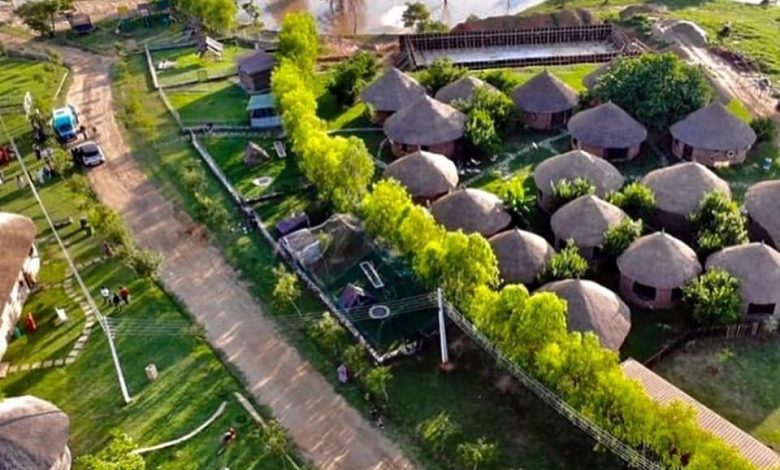
On a warm Saturday morning just outside Abuja, the air at Almat Farms is thick with the scent of freshly cut grass and roasted corn.
Children giggle as they feed goats, couples take selfies beside a flower garden, and a group of corporate staff in matching polo shirts jog towards a horseback arena. It feels like a resort—but this is a working farm.
Welcome to Nigeria’s growing experiment with agro-tourism, an emerging model of rural development that blends agriculture with leisure, education and culture.
In a country grappling with youth unemployment, rural–urban migration, and declining interest in farming, agro-tourism may offer a bridge between Nigeria’s agricultural heritage and its economic future.
Agro-tourism refers to travel experiences centered on farming activities. Visitors harvest crops, feed animals and learn traditional food preparation or stay in farm lodges while immersing themselves in rural life.
While the concept is relatively new in Nigeria, it is well established globally. In Kenya, coffee farms in Kiambu attract thousands of local and foreign visitors, generating about $200 million annually.
South Africa’s wine and game farms contribute an estimated R9 billion annually to its economy. Countries like Rwanda have also embraced agro-tourism as part of broader eco-tourism strategies.
For Nigeria—where agriculture employs more than 35% of the population but contributes less than 25% to GDP due to low productivity and weak value addition—agro-tourism presents an opportunity to reimagine farming. It shifts agriculture from a subsistence activity to a dynamic industry capable of generating income, education and pride
“We’re growing experiences, not just crops,” says Yomi Adeyemi, a farm manager at Abuja-based Almat Farms. “When people come here and see what goes into producing food, they leave with more respect for farmers. That’s the change we need.”
Nigeria’s agricultural backbone is under strain. Despite having an estimated 70.8 million hectares of arable land—of which only about 34 million hectares are cultivated—the country remains a net food importer. Rural communities are steadily emptying as young Nigerians migrate to cities in search of white-collar jobs.
According to the National Bureau of Statistics (NBS), over 55% of Nigeria’s rural youth are either unemployed or underemployed. The average age of a Nigerian farmer is over 50 years old, signalling a widening generational gap in the country’s food security chain.
This exodus has also deepened rural poverty. The World Bank reports that 139 million Nigerians live below the poverty line, most of them in agrarian communities. Roads remain bad, power unreliable, and farming profits low.
“The truth is, many young people don’t want to farm because they don’t see any glamour or gain in it,” says Abdulazeez Sagir, an agriculturist at the University of Abuja “Agro-tourism changes that narrative. It makes farming aspirational again, blending it with entrepreneurship, hospitality and technology.”
Agro-tourism offers a multi-dimensional solution, addressing economic, social and environmental challenges at once. Economically, it diversifies rural income streams. Beyond crop sales, farmers earn from entry fees, lodging, local cuisine, crafts and educational tours.
In Nigeria, Almat Farms serves as a tangible example of what’s possible. Spanning hundreds of hectares, the farm integrates animal husbandry, horticulture, leisure facilities, and eco-lodging. It hosts thousands of visitors each year, including schoolchildren, tourists and corporate teams.
“When visitors come, they don’t just play; they learn,” says Adeyemi “They see how crops grow, they feed the animals, and they ask questions. Sometimes they even want to buy vegetables to take home. That makes our work feel valuable.”
The impact ripples through the local economy. Surrounding communities benefit from increased demand for food supplies, crafts and transportation. Temporary jobs multiply during weekends and festive seasons.
Almat Farms also demonstrates how agriculture can be rebranded as a lifestyle product. Its mix of leisure and learning attracts both local and international visitors.
School tours are particularly popular, with children exposed to horse riding, vegetable tunnels, picnics, and hands-on agricultural lessons. The farm also hosts weddings and corporate retreats.
Globally, agro-tourism is a $69 billion industry, projected to grow by more than 12% annually between 2024 and 2030. In Africa, growth is fastest in the East and Southern regions, driven by ecotourism policies and partnerships with travel agencies.
In Nigeria, however, the sector remains largely informal. Few farms currently offer structured tourist experiences. Yet the potential market is massive, a population of over 200 million, with a growing middle class seeking wellness and nature-based leisure.
The Nigerian Tourism Development Authority (NTDA) estimates that if just 1% of domestic tourists redirected weekend trips to farm destinations, the country could generate ₦25 billion annually in rural tourism revenue—excluding indirect gains from job creation and supply chains.
Still, scaling agro-tourism faces major hurdles. Poor rural roads, unstable electricity, and weak internet connectivity limit access. Many farmers lack the capital needed to build visitor-friendly facilities and safe accommodations.
Regulatory gaps also persist. There’s no unified policy linking the Federal Ministry of Agriculture and the Ministry of Tourism to jointly promote the industry. Without that coordination, potential investors face uncertainty.
Almat Farms itself was built through private investment and partnerships rather than government support. Its success has inspired smaller farms in Nasarawa, Kaduna, and Ogun states to open their gates to visitors—a sign of growing momentum, but also of the need for policy backing.
If properly supported, agro-tourism could do for rural Nigeria what tech hubs did for urban youth: create a new narrative of innovation, opportunity and pride.
“That’s the change we hope for,” says Adeyemi, the farm manager. “To make farming something young people want to do, not because they have to, but because they see beauty and purpose in it.”
Summary not available at this time.