


The scars on Rania Blessings Charles’ hands tell a story of survival. Faint lines from razor blade cuts remain as permanent reminders of her aunt’s rage over missing money, money Rania never took.
At 26, the South Sudanese refugee has endured more loss than many face in a lifetime: witnessing her infant brother die during domestic violence, fleeing her country at age 12, years of physical abuse and near despair in Kenya’s Kakuma refugee camp.
Yet today, she speaks with quiet determination about her future, crediting an unlikely source for her resilience: Stop Child Abuse (SCA), a grassroots organisation founded by Fidel Aganze.
Rania arrived in Kakuma in September 2023, armed with a diploma that she she’d earned through street food sales, crochet work, and church support.
But academic credentials offered little protection from the isolation and fear that gripped her in the sprawling camp. Having registered as a refugee in 2018 after years of hiding in Nairobi, she came to Kakuma to obtain proper identification, which the UN demands of refugees seeking official documentation.
Her friend, Imani, connected her to a family willing to provide temporary housing. What Rania encountered there would change the course of several lives.
The household included four orphaned children: three girls and one boy, ranging from roughly five to fourteen years old, who had lost their parents and now lived with their aunt.
“They will treat their kids much better than these kids, and these kids are orphans, so they didn’t have anyone but their aunt,” she explains. The children were denied medical attention, education and food while the aunt’s biological children ate well.
The eldest girl confided in Rania during private conversations, mentioning an organisation called Stop Child Abuse. The girl had heard about it but explained that the children weren’t allowed to go anywhere except the market, nowhere they might find help. Rania knew she had to act.
Breaking the Silence
Through her friend Rosetta, Rania learnt more about SCA and made her way to their office. When she arrived, she came to report the children’s situation, but the staff recognised something else in her story.
“They even asked me, ‘How am I surviving here?'” Rania recalls. “So that’s when I came up with my story, told them the story, and then they would help me despite me not being a child.”
SCA’s community outreach staff had already begun their assessment.
According to Aganze, tSCA follows a meticulous process: “After doing an assessment, we just invite the survivor so that we can have counselling with them. After having counseling, together with different organisations, we do a follow-up to make sure this case reaches the police station.”
But the organisation’s approach is not purely punitive. It also works with community leaders to facilitate dialogue. They sit together to counsel the abuser to avoid repetition.
For the four children, SCA provided immediate emotional support.
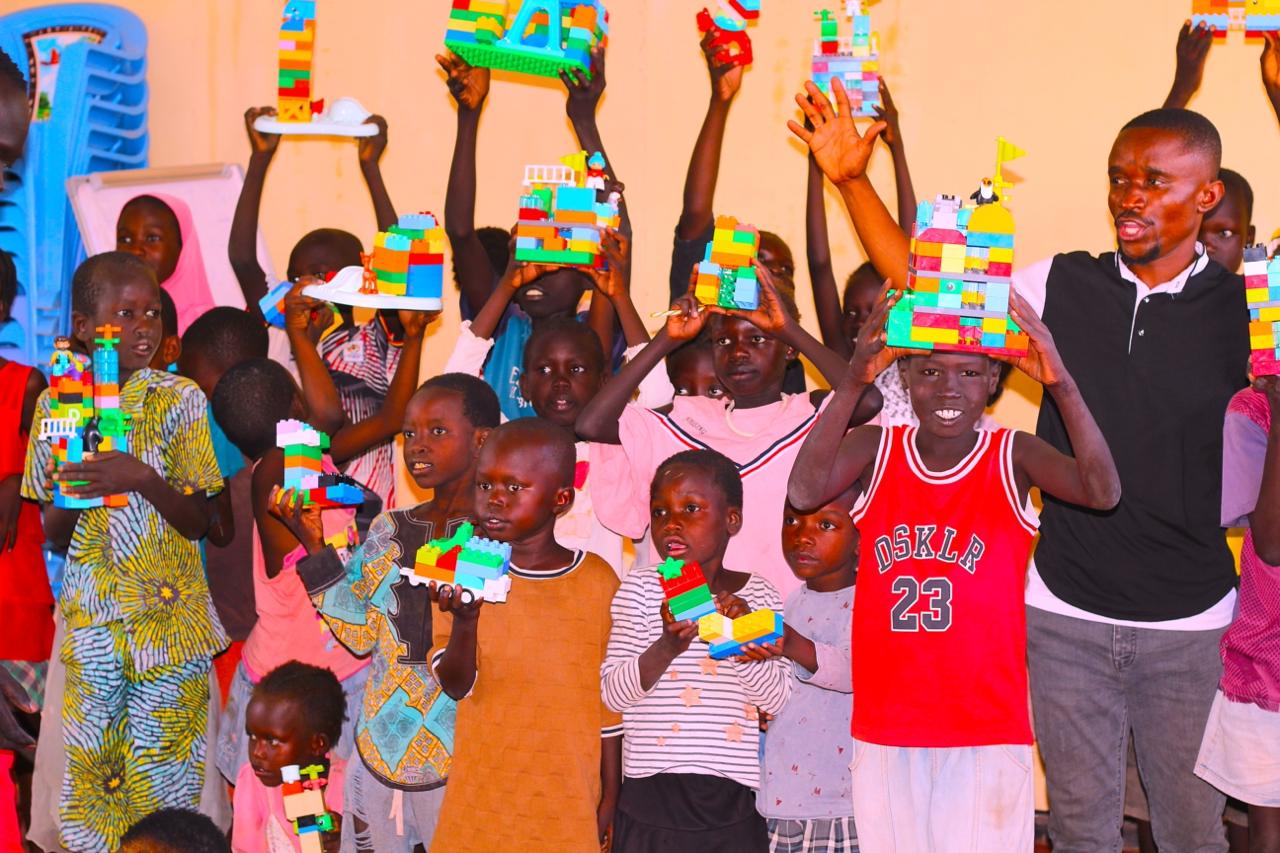
“They will talk to them, give them activities because they’re still young kids, give them toys that will make them be busy sometimes,” Rania describes. Counselors visited the children regularly, creating safe spaces for them to process their experiences.
Crucially, SCA staff also confronted the aunt directly, regularly visiting her home and providing material assistance too.
Following this, the aunt’s relationship with the kids improved, as Rania says. “I’ve seen that she has really changed. It’s not like before. The beating has stopped. They look much healthier.”
Research shows that combining material assistance with psychosocial support improves outcomes in child protection cases, particularly in refugee settings where poverty often exacerbates abuse. By addressing both the family’s economic stress and the aunt’s behaviour, SCA created lasting change.
From personal tragedy to collective action
Aganze understands desperation intimately. In 2014, as a teenager in South Kivu, Democratic Republic of Congo, he watched armed groups rampage his community.
His mother—then working with an Italian NGO to combat gender-based violence—was abducted for refusing to let perpetrators escape justice.
Soon after, Aganze and one of his brothers fled, as “they [the abductors] were looking forward to taking us,” he recalls. He has not seen his mother nor heard from his other five siblings since then
“I don’t know if they’re still alive, or maybe they have died,” he says.
That loss shaped his mission. Arriving in Kakuma in 2015 at just 17 years old, he came upon children living without caregivers and girls forced into early marriage.
Unable to speak English, he spent the next four years learning the language before founding SCA in 2019.
Over half of Kenya’s refugees are children of school age under 18, making child protection services critically important. Yet resources remain scarce, with organisations like SCA operating on minimal budgets despite serving vulnerable populations.
The four orphaned children represent just one case among hundreds SCA handles. In Kakuma, where cultures from across East Africa converge, child marriage remains a pressing concern.
“We found children of 13 years who are victims,” Aganze explains.
Due to cultural practices among some South Sudanese communities, parents withdraw girls from school to marry them to men with money.
UNHCR estimates that one in five girls in refugee camps is married before age 18, compared to one in nine globally. SCA challenges these practices community education and legal awareness, working with partners such as Saidia Community Initiative.
“We are standing to make sure that we advocate for these children who are suffering due to this early marriage,” he states.
He acknowledges the difficulty: “Due to culture from different people, it has become very hard. But what we are doing, we are just advocating to make sure that all people in our community are aware that child marriage is not allowed due to law.”
For Rania, SCA’s intervention extended beyond the children she’d reported. The organization connected her with the Danish Refugee Council for weekly trauma counseling.
“For me to heal and accept the situation I went through, and also be in the position of helping other people,” she reflects, “I need support.”
Her journey to Kakuma was long and brutal. At age 12, she fled South Sudan after her stepfather killed her infant brother during a drunken rage and then killed someone else while intoxicated, bringing angry relatives to their door.
She escaped with her stepfather’s sister to Nairobi, expecting safety and school. Instead, she found more abuse. The aunt beat her, forced her to work while her own children attended private school, and her son attempted to sexually assault Rania.
When the aunt accused Rania of stealing money, she cut Rania’s hands with a razor blade and poured pepper into the wounds.
“I still have the marks, both of my hands, the back of my hands,” Rania says quietly.
Despite these horrors, she persevered, eventually completing her diploma while she worked multiple jobs.
But when she arrived in Kakuma, the isolation threatened to overwhelm her.
“I was almost trying to end my life because I saw there’s no one who’s there to help me,” she admits. “But they stretched out their hand to me and they said I should feel free. SCA is my second home.”
That sense of belonging has been transformative. Though Rania acknowledges she hasn’t fully healed: “I’ll be lying if I say I’m healed”, she credits SCA with giving her hope.
She now lives independently, no longer staying with the family where she witnessed the children’s abuse, though she remains close enough to monitor their progress.
The weight of limited resources
Despite its impact, SCA operates under significant constraints. The organization relies on approximately 20-25 unpaid volunteers, and Aganze acknowledges the toll this takes.
“It is also good for the volunteers who are working to get something at the end of the month,” he notes. “When you get a donor, it will encourage them at least to focus and be serious on the work they’re doing.”
The challenges extend beyond funding. As a refugee, Aganze faces legal restrictions that limit SCA’s reach. “I don’t have all the freedom to do what I can do as refugees,” he explains. “We have a limit to do many things. If I was in my country, I’d have all the freedom to do what I can do.”
According to the Refugee Self-Reliance Initiative, fewer than 3% of refugees find a durable solution each year, creating a cycle where those helping others struggle themselves.
Aganze dreams of expanding SCA’s services: more counselors, enhanced legal aid, funding for business training and scholarships, but knows those dreams require resources his organization currently lacks.
For Rania, her contract work recently ended, leaving her dependent on small business income: the crochet and beadwork skills she’s honed over years and occasional SCA support.
Yet she remains enrolled in a peacebuilding course, determined to build skills that will eventually allow her to help others.
“If I look back, my mom was not treated the right way because I guess she didn’t go to school,” she observes. “The moment someone is given that chance of education, there’ll be a big difference in our community.”
Hope amidst hardship
Rania has applied for scholarships to pursue her degree, hoping to specialize in humanitarian work or sustainable development.
“I will not only help myself later on after I graduate, I’ll give back to the community,” she says. The irony isn’t lost on her, she survived by helping herself, and now she wants to formalize that survival into a profession.
Her message to other abuse survivors reflects hard-won wisdom: “It’s never too late. I used to think it’s the end of life, like there’s nothing out there again. But throughout the years, because of the hope and the ego of changing my life story, I’ve really tried to be strong for myself.”
She warns against the shortcuts that tempt desperate young people. “A lot of young kids, girls decide to get married early. Someone at age 10 or even 11, you find them with babies already, so they think maybe if they get married, life is going to change.”
But she also emphasizes tangible resources: “Let them not feel as if there’s no one there to help them. People are there. There are good people outside there like the SCA NGO.”
Aganze’s ambitions for SCA extend far beyond Kakuma’s boundaries. “We have a big dream to reach many countries,” he says. His vision includes expanding counseling services, providing legal aid for survivors navigating justice systems, and creating economic opportunities for women.
“A lot of people who are suffering are women, but some of them have good business ideas or talents. If possible, we give them funding or educate them on the importance of education.”
Still, SCA continues its work, sustained by volunteers who understand trauma intimately. “The only legacy I have is SCA,” he reflects. “When I saw the impact which we are making, I felt blessed. I feel thankful to God, and I feel encouraging the community to come together so that we can do more and more.”
For Rania, that impact manifests in small but significant ways. She still avoids crowded places, fearing relatives who might report her location to her aunt. She limits her social circle, unable to fully trust people.
“I don’t feel safe. I make sure maybe by 5 I’m already at home,” she says. “This kind of life is draining my opportunities. Maybe I’m missing better opportunities in life.”
Yet she also speaks openly about her past, recognizing that sharing her story aids recovery. “Opening up really helps me also,” she says. “It’s a process of me healing.”
As Rania puts it: “These hardships are like testimonies for our future. If you go through a hard life, it makes you stronger. It makes you adapt to life very easily.
Summary not available at this time.