



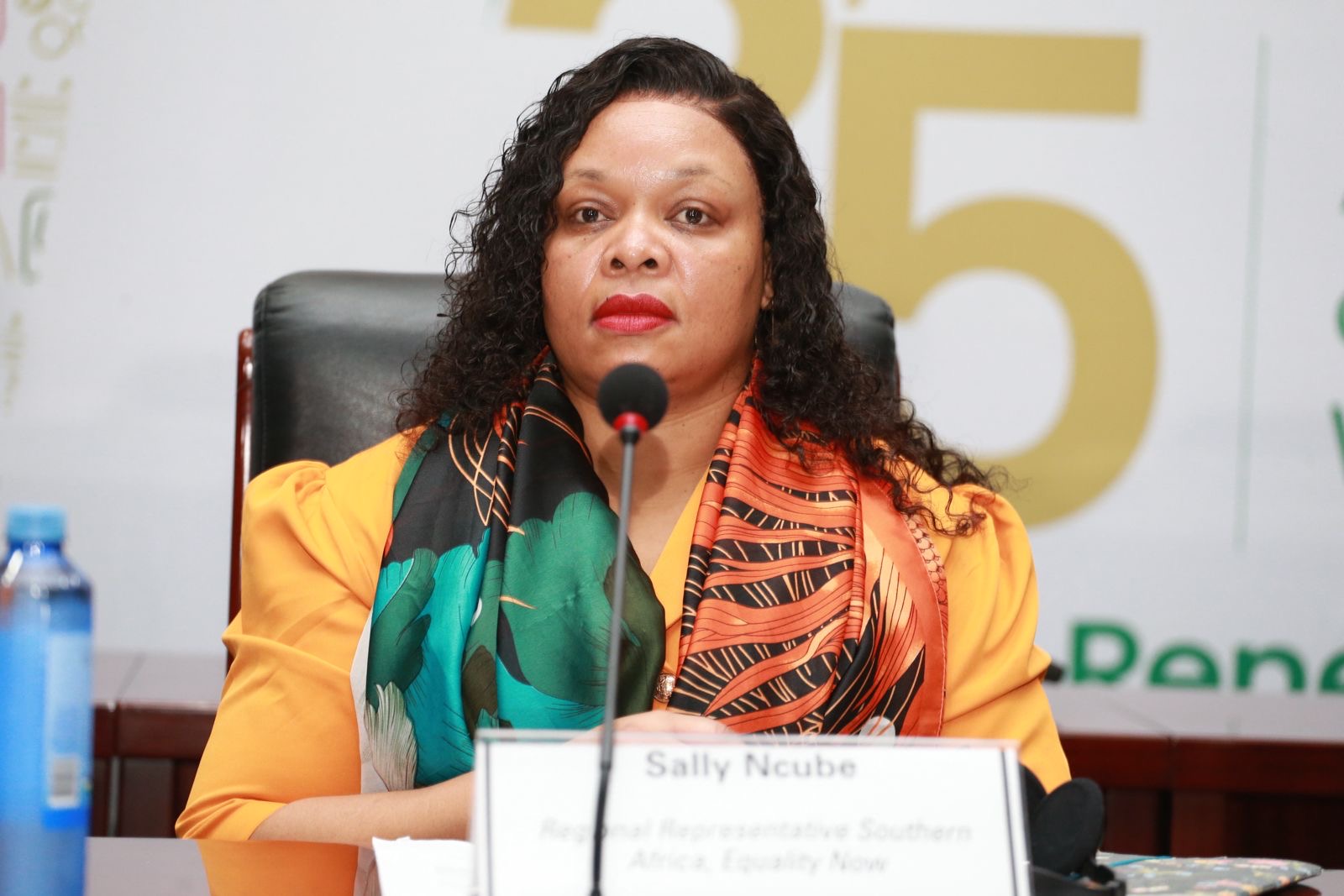
Sally Ncube was born on April 19, 1982—two years after Zimbabwe’s independence. She was named after the first wife of the late Robert Mugabe, who was then the country’s prime minister.
After her parents separated, Ncube and her siblings moved with their mother to her village in Masvingo, southeastern Zimbabwe. There, young Ncube quickly distinguished herself as the brightest student in her class, consistently ranking first. Despite her academic promise, her mother couldn’t afford to send her to a boarding school.
The disappointment cut deeply, yet it also strengthened her resolve. “I just made that vow that poverty was never going to be part of my life where you can’t afford it even if you are smart and intelligent,” she recalls.
Over the following years, Ncube walked 40-kilometres to and from secondary school each day. Leaving home at 5 a.m., she would trudge through the darkness, often arriving at school exhausted.
That same resilience is evident in the various organisations she leads today. In 2013, she founded the SAli Women’s Institute, which runs Women’s Leadership Schools, offering conflict-management and leadership skills.
She also co-founded Women’s Democracy Network Zimbabwe and later Women’s Democracy Network Africa in 2021. Today, as Equality Now’s founding Southern Africa Regional Representative, she leads legal advocacy to end child marriage and sexual violence across the region.
Her drive was shaped by her mother’s uncompromising counsel, she explains: “Girl, it’s not enough to be pretty and light-skinned. The world is mean. You better work hard so that you are the boss because if you are going to work in a space where your paperwork is not right, you are going to be exploited.”
Another formative influence came from an old TV series entitled Santa Barbara. In one episode in the series, a woman named Gina is kicked out by her husband and told to leave with nothing but what she brought into the marriage.
When reminded that even her dress isn’t hers, Gina strips it off and walks out unclad, refusing the humiliation of taking anything that diminishes her dignity.
That scene stayed with Ncube. “I just said, no, never in my life will I allow any person to humiliate me like that,” she remembers. “You need the power of dignity where you are resourced enough not to be humiliated.”
Along with the steady guidance from her mother and grandmother, that moment became the seeds that would bloom into her lifelong advocacy for women’s rights.
As an undergraduate in History and Development Studies at Midlands State University, Ncube made her first foray into political leadership in the Student Representative Council. She ran for Secretary of Sports and Culture, a usually male-dominated position.
The campaign took an aggressive edge as the male contenders insulted her and threatened to beat her in a bid to get her to withdraw. Despite the fierce opposition, Ncube won the election.
But the barriers to her leadership didn’t clear away. Years later, when she was appointed first president of the Development Studies Association while pregnant, male classmates protested that they “cannot have a Petticoat government.”
Through all of these hurdles, Ncube held on to her Girl Guide oath from childhood as an anchor: I promise that I will do my best to do my duty to God, to serve my country and other people.
Building institutions for change
In 2013, Ncube founded the Sally Women’s Institute. The institute runs Women’s Leadership Schools, providing training in confidence building, conflict management, goal setting and the art of delegation—essential skills for women who are “many things to many people,” she says.
In 2021, during the COVID-19 pandemic, she co-founded Women’s Democracy Network Africa with sisters from Uganda, Tanzania, Ghana and Nigeria. Unlike the Sally Institute’s focus on general leadership, WDN targets women with political ambitions—such as those in civil societies, independent commissions and public administration.
It runs campaigns like the “10 Days of Activism to End Violence Against Women Political Leaders,” raising networks of gender champions to promote responsive policymaking.
In sub-Saharan Africa, one in three girls is married before age 18, exposing them to higher risks of maternal mortality, domestic violence and lifelong poverty.
When Ncube led the women’s coalition movement in Zimbabwe, she sued the Movement for Democratic Change for unfair dismissal after the party split. In response, she received death threats, followed by online harassment.
Once, while training political leaders in South Sudan, officials with AK-47s accused her of holding a fake visa, despite it having been issued by their own embassy.
Working during Zimbabwe’s Government of National Unity, tear gas would sometimes flood her office during political violence. As with all barriers, she’s learnt to adapt and persist.
“Fear is not part of my DNA,” she says. “The more the tension, the more I get wired. I can’t back down.”
Impact across southern Africa
Today, Ncube’s work spans southern Africa. At Equality Now, she leads legal advocacy to end child marriage and sexual violence, promotes youth digital rights and works with human-rights mechanisms across the Southern African Development Community (SADC) member states.
She’s contributed to revisions of the SADC Protocol on Gender and Development, where she fought heated debates against countries wanting cultural exceptions to allow child marriage. Her position was uncompromising: 18 years old, no exceptions.
She also provides technical expertise to governments, parliaments and the African Union, contributing to continental reports and advocacy at the African Committee of Experts on the Rights and Welfare of the Child. Her work targets the root of generational poverty and violence that affects millions.
All her work has earned her significant recognition: 1st Runner-up for Director of the Year (Institute of Directors Zimbabwe, 2021), the Zimbabwe National Chamber of Commerce Women in Enterprise Award (2021), Director of the Year (National Association of NGOs, 2021-2022), Distinguished Women Empowerment Leader (Zimbabwe Community News Awards, 2022), and 1st Runner-up for Team Leader of the Year (Professional Women Forum, 2023).
Alongside her regional responsibilities, Ncube raises three children with the support of her husband, who shares parenting duties, a household assistant and strategic use of time-saving technologies.
She plans meticulously, delegates ruthlessly and builds support systems at every level while bagging various leadership and professional certifications.
“I didn’t come this far to just end this far,” she says, echoing her mother’s words. “I need to push more because she was an inspiration who invested in me.”
Summary not available at this time.