


Much to the dismay of parents and guardians, schools hardly safeguard the health and well-being of young people. Amidst the global campaign to promote healthy learning institutions, research shows that children and adolescents continue to confront enormous health risks at school.
The Global WASH monitoring report, released in May 2024, paints a stark portrait. According to the report, 447 million students lack drinkable water, 427 million have no access to usable single-sex toilets and 646 million are deprived of basic hygiene supplies.
Awareness about menstrual health is even more dire. Only a paltry 39% of schools globally teach menstrual health, with just 11% in sub-Saharan Africa providing disposal bins for sanitary pads. As inflation soars within the region, a rising number of adolescent girls are becoming priced out of period pads.
Nigeria offers a prime example. Access to drinking water and hygiene facilities is low in most schools.
Compounding the woes are deep inequalities across states. While basic sanitation coverage is 90% in Lagos, the equivalent in Gombe, northern Nigeria, is a mere 9%. The report indicates that only 3.8% of schools provide free menstrual materials, leaving 96% of pupils to fend for themselves.
Compared with outreaches, schools provide a unique setting for cultivating healthy behaviours. Children spend at least one third of their time in schools.
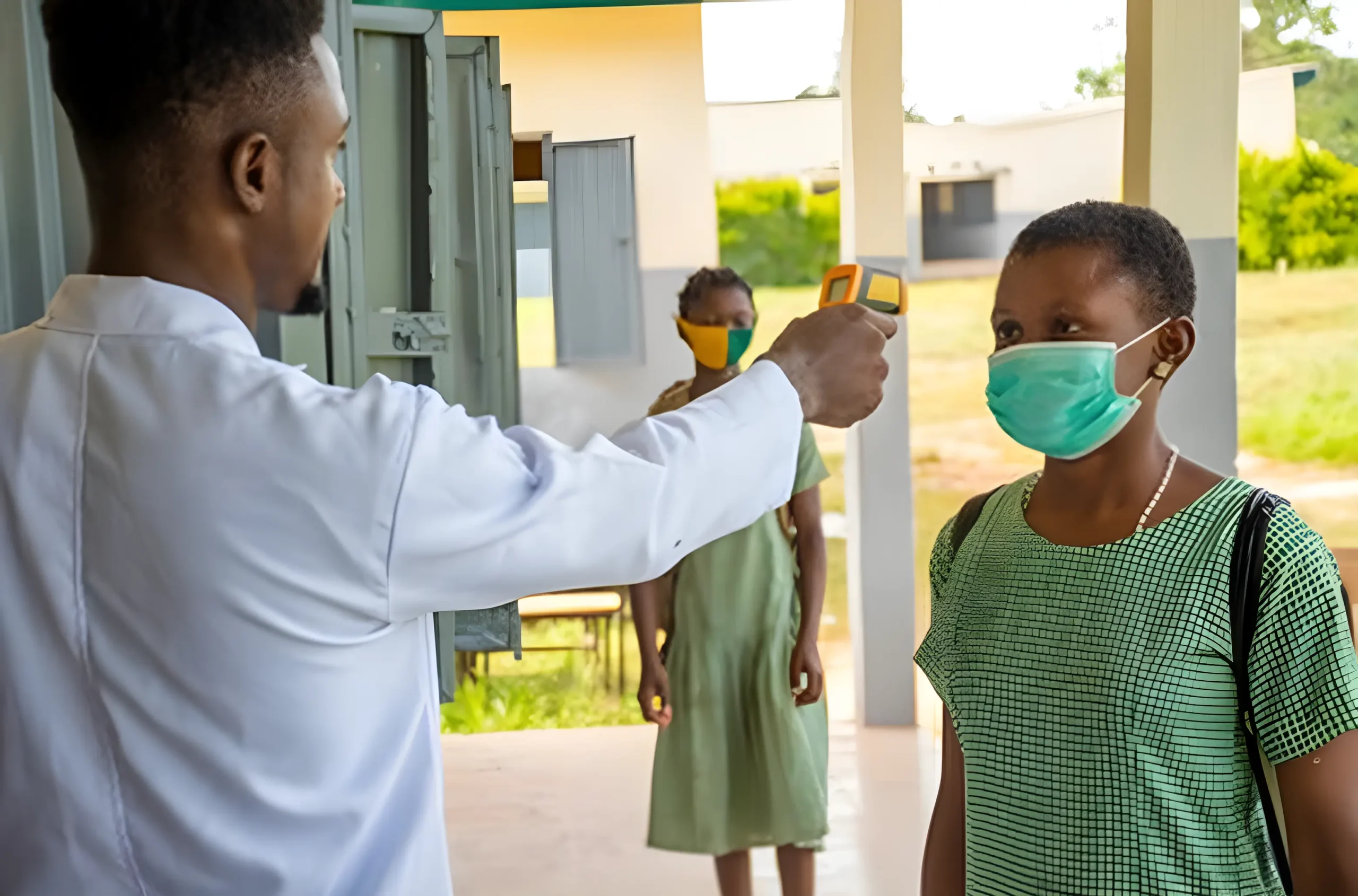
Moreover, school-based health services, such as vaccinations and support for mental health, serve as vital extensions of primary health care, reaching adolescents that might otherwise slip through the cracks.
International organisations have attempted to reverse this deepening sanitation decline. In 2021, WHO, in partnership with UNESCO, launched the “Global Standards for Health-Promoting Schools,” which builds on the 1995 Global School Health Initiative.
The framework aims to serve over 2.3 billion school-age children worldwide through six core pillars: healthy school policies, safe physical environments, positive social environments, health education and skills, links with parents and community and access to health services.
But systemic failures have threatened these reforms. In response, several African countries are starting to domesticate some global standards.
One example is Kenya, which—in the past two decades—has ramped up deworming, vaccination, health education and water, sanitation and hygiene (WASH) infrastructure in some of its schools. This has improved learning outcomes, especially in its rural districts.
In a similar vein, Ethiopia has integrated school-based nutrition, regular health screenings and mental-health awareness into its secondary-school curriculum, enhancing retention and dialling back adolescent pregnancies.
More recently, Rwanda expanded its Safe Schools initiative to include robust child-protection policies, nutritional meals, malaria prevention and counselling services.
These national policies have translated into decent progress. For instance, schools aligned to the Health-Promoting School (HPS) model reported reductions in absenteeism (often triggered by malaria and gastrointestinal illnesses), better nutritional status among adolescent girls and enhanced academic performance.
In low-income districts, free school meals have boosted enrolment and attendance, while improved toilets and facilities have extended schooling by an estimated 2.5 years in high-risk areas.
Such services have also fostered early diagnosis among school-aged children, dramatically lowering mortality rates.
Additionally, they reduce healthcare costs for families and governments, lower disease burden and increase school completion rates
Healthier schooling can also yield economic gains, as a recent study of health reforms in mid-20th-century European schools finds. Reforms targeting both education and health led to a 9% increase in earnings among affected cohorts, as well as reduced hospitalisations and longer life expectancy.
For Africa, this means the potential of not only more students in school but also a more educated, healthier workforce.
Summary not available at this time.