



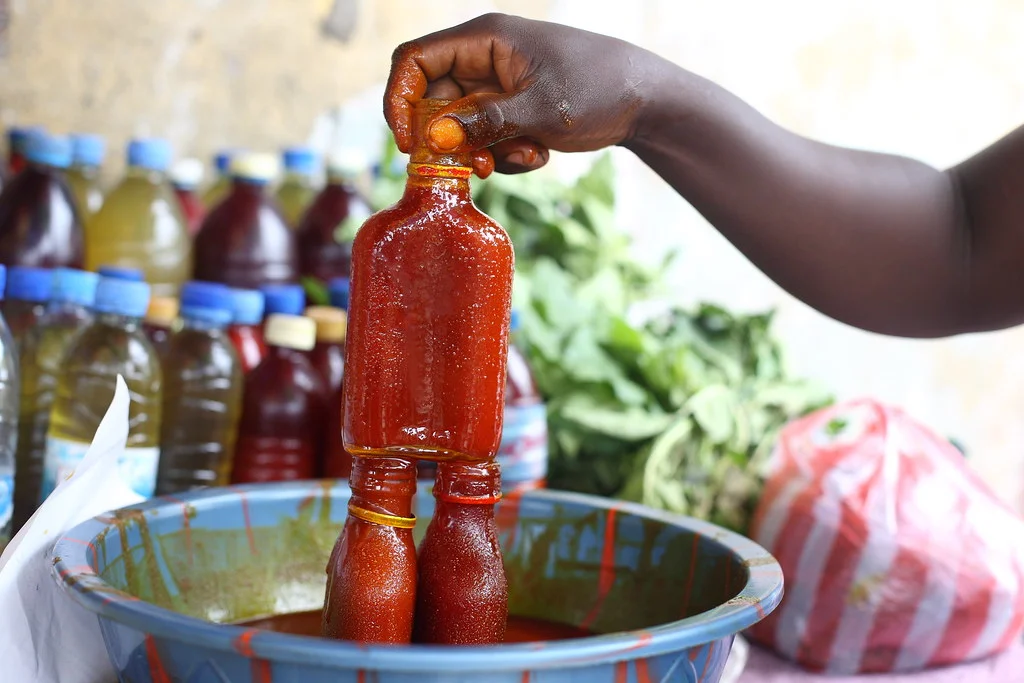
The rise of adulterated palm oil in Nigeria is sparking widespread concerns. What’s behind the trend?
A viral clip showing industrial dyes being mixed into palm oil has reignited concerns about food safety and regulation in Nigeria. The video circulated widely on social media and drew reactions from health influencers like Aproko Doctor.
Naturally, palm oil derives its orange-red colour from beta-carotene, a vitamin with antioxidant properties. Over decades, though, Nigerians have come to associate a deep red shade with superior nutritional quality, creating room for manipulation.
To meet consumer expectations and boost sales, some traders infuse palm oil with industrial dyes to deepen its tinge, thereby making it appear fresher than it actually is.
While the viral clip is only recent, evidence suggests that the trend may be far more widespread than many realise.
Market surveys have reported a proliferation of adulterated palm oil in most markets, with tests showing notable traces of Sudan and Azo dyes. Sudan IV, particularly, has been linked to cancer as well as liver and kidney failure.
Why artificial palm oil is widespread
Several factors have fuelled this trend. Start with local production. Nigeria’s annual palm-oil output falls short of demand, pressured by rising production costs, climate pressures and supply chain disruptions.
In a bid to meet demand and maintain profit, some merchants turn to using dyes to mimic high-quality palm oil.
Consumer behaviour also plays a role. The strong cultural preference for brightly coloured palm oil reinforces demand for adulterated products.
Oils with deep red hues are perceived to be more nutritious, giving artificially enhanced varieties a competitive edge even though they violate food-safety regulations.
In Nigeria, the use of industrial dyes in food products is prohibited. However, thanks to limited manpower, inconsistent inspections and weak penalties, thousands of unscrupulous traders in informal markets continue to operate outside the crosshairs of regulators
While rapid test kits have been developed to help consumers detect fake palm oil, they are not widely accessible.
As expected, experts have bemoaned the rise of adulterated palm oil, which is turning a kitchen staple into a silent threat.
When added to palm oil, industrial dyes wear away the naturally occurring carotenoids and accumulate in the body, raising the risks of organ failure in consumers. Beyond toxicity, adulterated palm oil can mask spoilage and alter cooking performance.
What can be done
Tackling this crisis requires a multi-layered response. Along with stronger regulatory action, agencies like NAFDAC must intensify routine inspections and exercise solid penalties to deter repeat offences.
Consumer education is equally critical to help buyers identify suspicious varieties—such as those that appear excessively bright, emit unusual smells or leave coloured residues during cooking.
In a similar vein, promoting trusted brands and verified sellers can help greatly to wean attention away from adulterated oil. Improving oil packaging not only improves hygiene but also makes it easier for regulators to enforce quality standards—improving food safety outcomes.
Capacity-building programmes for small-scale farmers and enhancing infrastructure are essential in boosting the supply of genuine palm oil.
The bottom line
The viral TikTok video exposes a deeper problem within Nigeria’s food system, where appearance typically takes precedence over safety.
Rooting out the knockoffs will require more than cautious consumer choices. Stringent regulation, consistent enforcement and sustained support for local producers must work together to restore trust in one of Nigeria’s most essential cooking ingredients.
Summary not available at this time.