



By Agbai Sharonjoyce
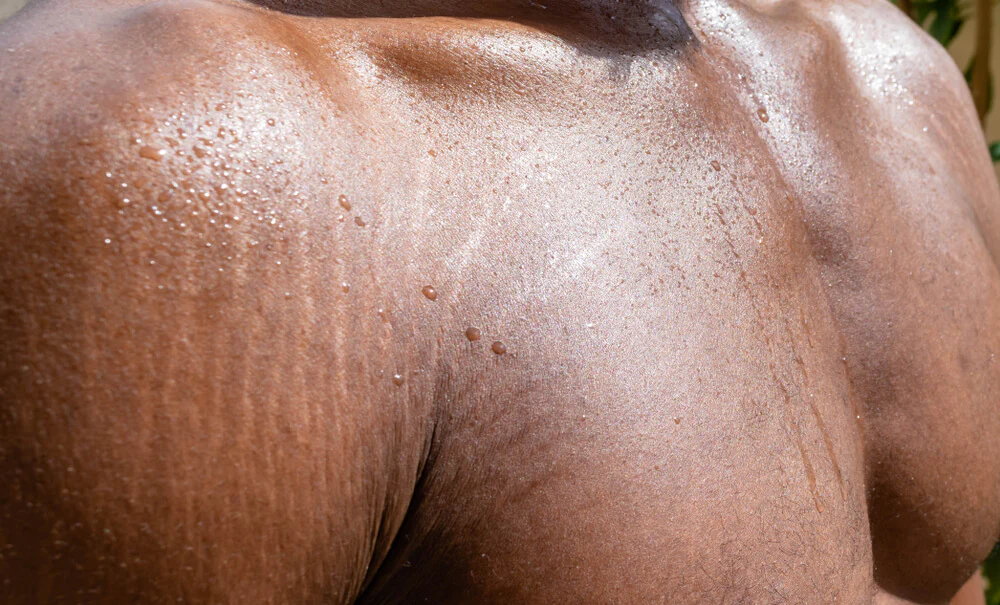
Medically known as striae distensae, stretch marks are a natural response to body changes. They are eminently common—affecting up to 90% of women and men too—and are simply a sign of the skin adapting to growth or movement.
How stretch marks are formed
The skin has three layers, and stretch marks develop in the middle layer called the dermis. This layer contains collagen and elastic fibres that give the skin both strength and flexibility.
Collagen provides firmness and support, while elastic fibres allow the skin to stretch and bounce back. When these fibres are stretched too quickly or too far, they can tear or weaken.
Fresh stretch marks, known as striae rubra, appear as red or purple lines because the stretched dermis becomes thin enough for blood vessels to show through. Over time they become paler and look more like scars.
Stretch marks form most commonly during pregnancy, rapid growth (puberty) or quick weight changes. When the skin stretches faster than the dermis can adapt, elastic tissues break. Although the skin tries to repair itself, the fibres rarely return to their original structure.
Research has taken a deeper look at what happens inside the skin. A study published in the British Journal of Dermatology examined skin samples from pregnant women with new stretch marks.
Scientists identified the breakdown of the extracellular matrix (ECM). This matrix supports the skin’s structural support. Also, major components like collagen types I and III were found to be reduced.
At the same time enzymes such as MMP3, responsible for destroying tissues, were found to be more active, while the natural body blockers against these enzymes were decreased.
Researchers also noted that dermal fibroblasts, the cells responsible for producing collagen, shift into a state of prolonged inflammation. This disrupts normal healing and contributes to the lasting appearance of stretch marks.
Risk factors
While skin stretching is the main cause, several factors increase the likelihood of developing stretch marks.
During pregnancy, hormones such as relaxin soften collagen, making the skin prone to tearing. Along with rapid weight changes, high cortisol (the body’s stress hormone) can weaken elastic fibres and reduce resilience, thereby increasing the likelihood of stretch marks.
Naturally, some people have more elastic or less elastic skin, making them more or less prone to stretch marks.
Today, there’s no shortage of creams and oils promising to prevent or erase stretch marks. However, most lack strong scientific backing. Dermatologists agree that most topical products offer limited results.
Current research suggests that future therapies should focus on protecting existing elastic fibres rather than trying to repair damaged ones.
A promising development is the new laboratory skin model called Striae Reconstructed, which mimics the biology of stretch marks. This model allows scientists to test more effective treatment and deepen understanding of the condition.
Final takeaway
Stretch marks are far more than simple lines—they reflect complex changes occurring deep within the skin. Inflammation, weakened fibres and disrupted fibroblast activity all contribute to their formation.
As research advances, new tools and discoveries are paving the way for better treatment options. With improved scientific insight, more effective and evidence-based solutions may become possible in the future.
Summary not available at this time.