



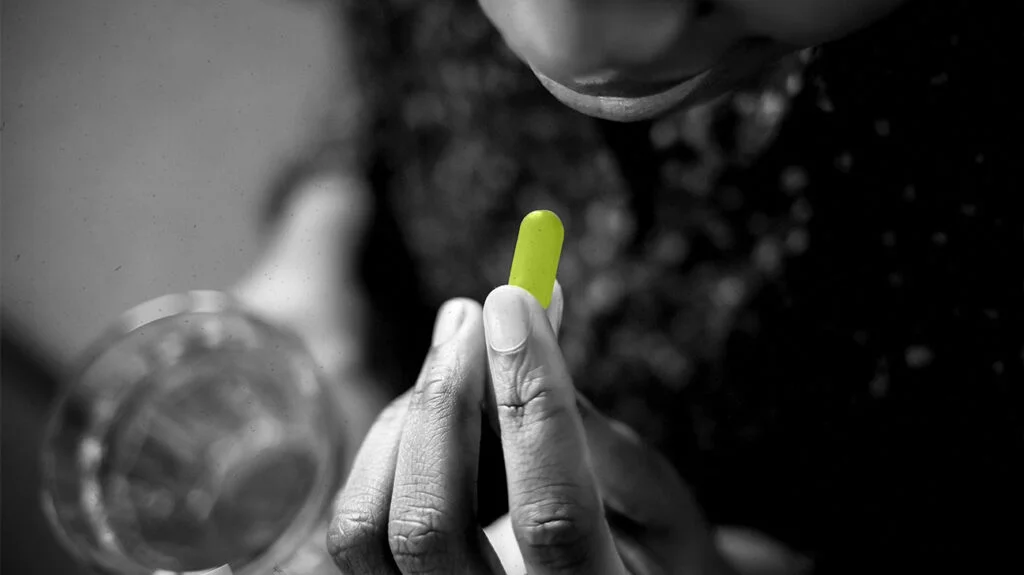
Administering drugs to children is often a battle. To avoid the tantrums, many Nigerian parents cleverly conceal the drugs in solid meals like eba, fufu or semolina, which the child gulps without any fuss.
But old habits die hard. Even as adults, many continue to hide pills inside dense, starchy foods to mask bitterness and avoid nausea. With one in every 25 people worldwide experiencing swallowing difficulties, the trend has become a public-health concern.
The Nigeria Centre for Disease Control (NCDC) has linked improper medication use to rising cases of antibiotic resistance, as experts continue to decry the practice.
“The safest way to administer oral medicinal tablets,” notes Caleb Ezenma, a pharmacist who has studied medication patterns among Nigerians, “is when swallowed with water, prescribed liquid forms or properly guided crushing/mixing procedures.”
Wrapping drugs in food, he explains, delays the drug action and increases the risks of choking and “proliferated side effects.”
Why foods interfere with drugs
Water is essential for drug absorption, as it helps tablets disintegrate faster. Heavy meals like eba and fufu are “heavy, viscous and thick,” thereby preventing enough water from reaching the tablet.
Dense starchy foods also slow gastric emptying. When the stomach empties late, drugs arrive in the small intestine later than intended. Some medicines are designed for an empty stomach; others require quick exposure to stomach acid. Heavy foods alter these conditions, thereby reducing the drug potency.
Because eba and fufu are sticky and densely packed, they slow disintegration, bioavailability and the onset of action. Amlodipine, a drug that helps lower high blood pressure, typically begins working within 20 minutes. When embedded in dense meals, however, that design is disrupted, and the tablet may sit for much longer before breaking down.
Controlled-release and sustained-release drugs may burst prematurely or release too slowly when trapped in heavy meals. Enteric-coated drugs may dissolve too early and irritate the stomach. Antibiotics may never reach effective blood levels.
Antimalarials may act too slowly to clear parasites. Drugs like doxycycline and potassium chloride can injure the oesophagus if lodged in food.
A tablet hidden inside a lump of food creates a choking hazard, especially for children and older adults. The lump becomes larger and harder, making it more likely to lodge in the throat.
If a tablet adheres to the oesophagus, it can cause painful ulcers or inflammation. Incomplete absorption is another danger. Some tablets, Ezenma notes, “pass out partially undigested,” meaning the body never received the intended dose.
Ezenma has repeatedly observed the consequences in clinical practice. Antibiotic failure, underperforming antimalarials, delayed pain relief and reduced effect of antihypertensives—all traced to patients burying their tablets in food.
“I warned a patient not to wrap clarithromycin in fufu because it would reduce the bioavailability, and the patient went and doubled the dose, wrapped it with semo and the rest is story.”
Some people genuinely struggle with swallowing pills. For them, Ezenma recommends syrups, dispersible tablets, injections, suspensions, soluble tablets and medically supervised crushing.
Capsules can occasionally be opened and mixed with soft foods like pap or yoghurt—but only under medical guidance.
The goal, he stresses, is to always opt for pharmaceutical alternatives designed for safe consumption.
Ezenma strongly advocates community education: clear explanations at pharmacies, instructions in local languages, visual posters, radio jingles and church announcements.
He encourages pharmacists to use local expressions. Some people understand best when cautioned plainly, he adds.
Medicines are designed to heal—if taken correctly. Hiding tablets in food may seem harmless, but the consequences are increasingly evident in treatment failures, antibiotic resistance and preventable complications.
Worse even, the damage from ingesting medication incorrectly can linger for weeks, months or even years.
Summary not available at this time.