



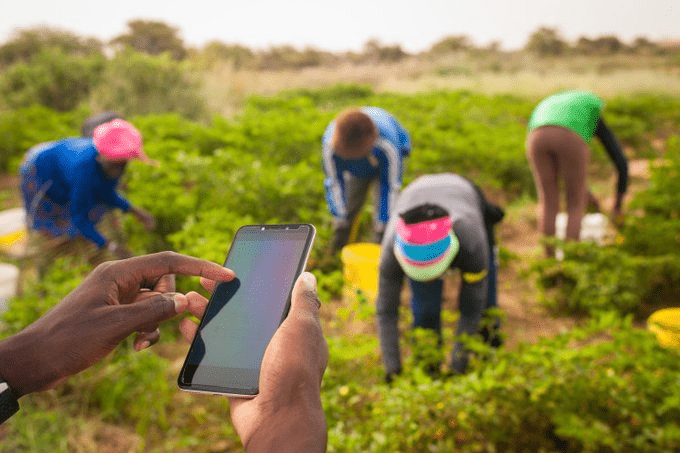
Nigeria’s pilot of an AI-powered Digital Agricultural Extension Systems (DAES) platform signals a growing recognition that the country’s agricultural challenges are as much institutional as they are technological.
Agriculture accounts for a significant share of Nigeria’s gross domestic product (GDP) and employs a majority of the labour force, yet weak extension services remain a binding constant.
With one extension worker currently responsible for an estimated 10,000 farmers, the scale of the advisory deficit explains why improved seeds, fertilisers and climate-smart practices often fail to translate into higher yields or incomes.
The DAES initiative, validated through a multi-stakeholder process involving public institutions, private actors and development partners, seeks to address this gap through scale rather than substitution.
By leveraging artificial intelligence, voice-based interaction and mobile platforms, the system is designed to complement, not replace, existing extension infrastructure.
The involvement of organisations such as the African Forum for Agricultural Advisory Services, Sasakawa Africa Association, Extension Africa, Africa Practice, Sahel Consulting, alongside financial support from the Bill and Melinda Gates Foundation, reflects an effort to align global best practices with Nigeria’s local realities.
Importantly, the initiative appears to draw lessons from earlier digital agriculture that struggled with adoption and sustainability.
Beyond DAES, Nigeria already has policy and market-based solutions that address different dimensions of the same problem. One such framework is the National Agricultural Extension Policy (NAEP), which aims to transform extension service delivery through a pluralistic approach involving federal and state government, research institutes, private consultants and civil society organisations.
The DAES platform can be seen as an enabling layer for NAEP—providing the technological backbone needed for coordination and shared service delivery across actors.
The agritech ecosystem offers another complementary pathway. Platforms such as ThriveAgric and others focused on input supply, weather information, market price discovery, and farm management have expanded rapidly in recent years.
While many of these platforms operate in silos, DAES emphasises integration and bundled services. This creates opportunities to combine advisory support with market access and financial services offered by agri-fintech and agri-marketplace platforms, addressing not only knowledge gaps but also constraints related to finance and offtake.
Financial inclusion initiatives further reinforce this ecosystem. Development finance institutions and commercial banks increasingly rely on digital farmer profiles, production data, and analytics for agricultural risk assessment.
When digital extension platforms generate credible, verifiable data on farming practices and productivity, they can reduce lending risks and unlock financing for smallholders. The tiered pricing model proposed for DAES aligns with this objective, recognising that long-term sustainability will require a mix of public funding, development support, and commercial revenue.
Climate change adaptation represents a third, growing area of convergence. National and subnational climate-smart agriculture initiatives promote practices such as improved soil management and water-efficient cropping systems.
Digital extension services can strengthen these efforts by delivering location-specific climate advisories. However, for such recommendations to be effective, they must be grounded in local knowledge systems and trusted by farmers.
Finally, robust data governance is fundamental to the success of digital extension. As Nigeria advances its digital economy agenda, clear rules on data ownership, usage, and protection will be essential to maintaining farmer trust while enabling innovation in agribusiness, insurance, and research.
Nigeria’s experiment with AI-enabled digital extension is best understood not as a standalone innovation, but as part of a broader ecosystem of policies, platforms, and partnerships.
Its effectiveness will depend on how well it aligns with ongoing extension reforms, agri-tech solutions, financial inclusion strategies, climate initiatives, and data governance frameworks. If properly integrated, digital extension could become a catalytic service—transforming innovation into measurable gains in productivity and farmer incomes.
Summary not available at this time.