


For more than two dozen years, Nigeria’s agro policies were formulated based on old, outdated statistics. This changed in 2024, when the National Bureau of Statistics completed the national agricultural census.
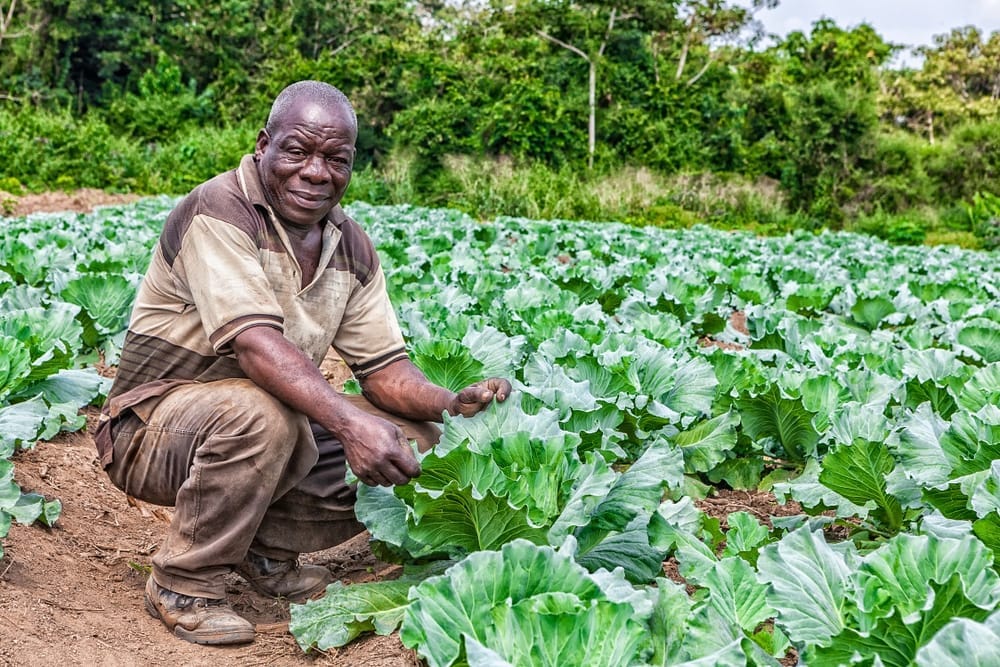
Despite the macro-level insights, the problem of real-time, granular data at state and local government levels continues to persist. Smallholders, who make up 88% of the country’s farming population, are largely cut out from operational systems.
Less than 3% of rural landholders possess formal land titles, a core requirement for obtaining credit from financial institutions. Without up-to-date farmer registries, most input distribution programmes are plagued with leakages, preventing subsidies from reaching intended beneficiaries.
A $2.2 billion allocation by the African Development Bank targeting Special Agro-Industrial Processing Zones struggled to identify actual farmers.
In response, the federal government launched a National Digital Farmers Registry workshop last November to harmonise fragmented farmer databases across states using the National Identification Number. The initiative was part of the Federal Government-IFAD Digital Innovation Action Plan.
Abia State has recently joined the initiative. At a tech and innovation summit in Umuahia, the state government announced the Abia Agriculture Dynamic Database System, a comprehensive digital platform designed to transform agricultural data collection, farmer identification, planning and targeted interventions across its 17 local government areas.
This architecture tackles myriad shortcomings associated with farming data. It captures farmer biometric information, geolocations linked to specific plots, land sizes, crops cultivated, livestock raised and expected outputs.
This comprehensive profiling enables precise targeting of agricultural interventions, ensuring inputs reach actual farmers rather than disappearing into informal markets or enriching middlemen.
This also facilitates fair and transparent distribution of seeds, fertilisers and equipment. Credit institutions can now obtain accurate essential data on farmers seeking finance.
Market intelligence flows bidirectionally, with farmers receiving price information while buyers identify suppliers of specific commodities.
Nigeria’s 2025 Agricultural Production Survey documented steady agricultural growth driven by expanded cultivated areas and improved practices, with food prices falling sharply across all geopolitical zones.
These dynamics demonstrate why accurate, real-time data becomes essential. Governments cannot respond effectively to hikes in fertiliser prices without identifying vulnerable farmers. Similarly, credit programmes require verification systems.
Abia’s initiative draws inspiration from successful precedents. In 2017, Anambra State initiated a comprehensive digital farmer database, capturing personal, biometric, geolocation and agricultural practice details across communities, accessible through centralised systems at the state ministry of agriculture.
That pioneering effort demonstrated feasibility and value. Pilot programmes in Kwara and Oyo States, using mobile extension and digital land certification tools, reported yield increases of 15-30% among participatants.
The new digital village, launched by the Ministry of Agriculture in partnership with FAO, aims to create a national registry, integrate land information systems and deliver real-time extension services.
Summary not available at this time.