


Kano State is confronting a familiar challenge in Nigeria’s agricultural sector—thousands of smallholder farmers still depend on low-yield, labour-intensive methods that limit productivity, deepen rural poverty and leave families vulnerable to rising food costs.
Statistics show that just 16% of Nigeria’s smallholder farmers have access to mechanised equipment. Amidst this, an estimated ₦3.5 trillion is lost annually to post-harvest losses, especially in grains and perishables.
In states like Kano, where agriculture is a mainstay, lower yields, reduced incomes and growing food insecurity have become widespread.
Further, smallholder farmers in this area suffer major losses due to the lack of storage capacity for their harvests and the absence of harvesters, including fluctuating markets. These gaps have left households with high production costs and low profits, reinforcing poverty across agricultural communities.
In response, Kano State’s Agro-Pastoral Development Project has emerged as one of the most extensive interventions supporting smallholder farmers in the region.
Implemented with funding from the Islamic Development Bank, the Lives and Livelihoods Fund, and the Kano State Government, the five-year programme aims to strengthen food security, reduce poverty and expand modern agricultural practices among vulnerable households.
Officials report that more than 470,000 smallholder farmers across the state’s 44 local government areas have since received support, making it one of the largest mechanisation and capacity-building efforts in the state’s history.
According to the project implementing team, the crop component project, run by the Sasakawa Africa Association, has made over 80% of the project target in improving methodologies such as crop productivity, seed systems and climate-resilient methods of farming.
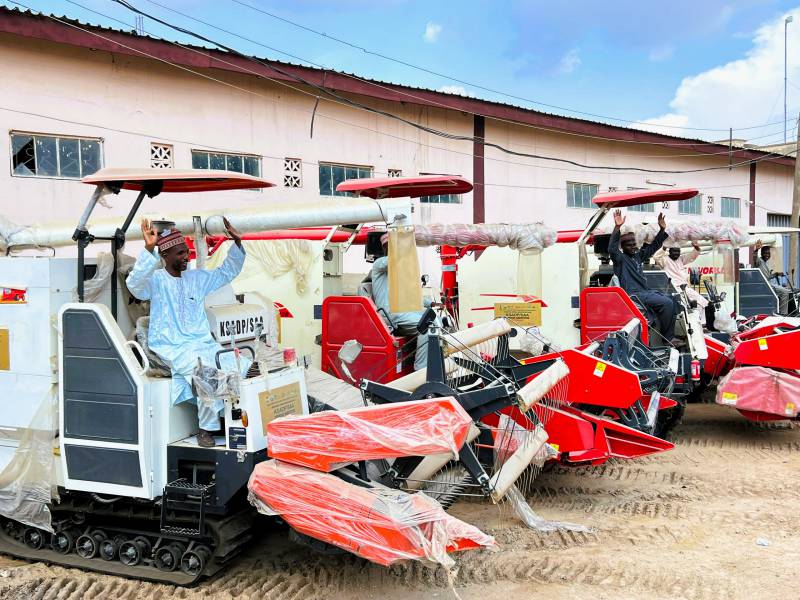
The project purchased 98 tractors that are accompanied by trailers, ploughs, and harrows, of which some are currently put to use at the mechanisation centre.
Mini-tractors and reapers in hundreds are being distributed to the many farmers who operate in several value chains such as rice, maize, millet, and vegetables.
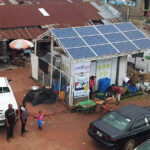
Solar pumps were also introduced to significantly cut irrigation costs during dry-season farming, making production more affordable and profitable for farmers.
For small-scale farmers who depend on irrigation during the dry season, the solar-powered irrigation pumps are especially revolutionary, considering that the cost of diesel has increased by 23.98% in the past month.
Kano’s model mirrors broader efforts across Nigeria, where governments and development partners are focusing on mechanisation and smallholder support.
In Kaduna State, for example, the Special Agro-Processing Zone, or SAPZ, initiated and funded by the African Development Bank, has seen the introduction of modern machinery and aggregation points that aim to promote value addition and prevent losses that accrue to products that are currently lost after harvest.
Similarly, in Borno and Adamawa, irrigation programmes, initiated and funded by the FAO, are supporting many farmers in carrying out agricultural activities that were interrupted due to conflict.
Despite its progress, Kano’s Agro-Pastoral Project still indicates systemic weaknesses that must be comprehensively funded in the long run.
Many of its beneficiaries are still lacking in expertise and finance. Most cannot afford to change out-of-date machine parts or expand their business owing to limited access to credit.
Another concern is sustainability. In many instances, it may be difficult to maintain such large-scale equipment distribution programmes on an ongoing basis in the absence of donor funding.
Despite the above shortcomings, the project holds valuable lessons for agricultural development in Nigeria. For one, it reveals that large-scale mechanisation for smallholder farms can be achieved with collaboration between the government and development partners.
Summary not available at this time.