



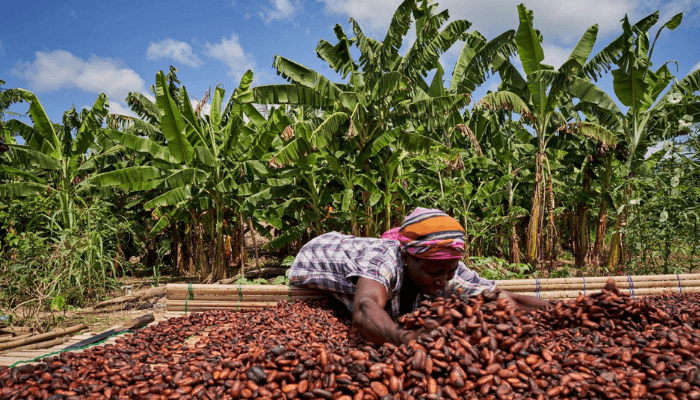
Smallholder cocoa farmers in Nigeria continue to struggle with poor productivity, outdated farming practices, and inadequate access to finance.
A lack of traceability systems and weak environmental standards further limits their entry into premium international markets that reward sustainable and responsible production.
Nigeria’s cocoa industry is overwhelmingly dominated by small-scale farmers, who collectively account for all domestic output.
Yet most earn far below a living income. In Osun State alone, more than 2,000 farmers recently met the criteria required to benefit from sustainability-linked incentives.
To bridge this gap, food and agro-allied company WACOT limited disbursed N158 million in Sustainability Differential Payments (SDP) to 2,062 cocoa farmers.
The programme rewards farmers who adopt verified sustainable practices, including good agricultural methods, proper traceability compliance with environmental safeguards.
An additional N5.8 million was awarded to top-performing farmers. By using digital platforms, this has enhanced transparency, enabled direct payments and improved farmers’ access to formal financial services.
This model is now being replicated across similar sustainability-led initiatives emerging in West Africa.
Participating companies typically pay premiums for cocoa that is traceable and produced under environmentally responsible conditions. These efforts combine farmer training, digital inclusion and performance-based incentives to strengthen rural livelihoods and lure younger farmers to the sector.
While such payments help lower income inequalities, they remain too modest and irregular to fully protect farmers from the volatility of global cocoa prices.
Scaling the programme will require sustained funding, continuous verification and long-term monitoring to ensure farmers do not revert to unsustainable practices.
Nevertheless, the N158 million support demonstrates the potential of incentives to stimulate cocoa yields and raise farmer incomes.
As more companies adopt similar approaches, Nigeria’s cocoa industry stands a better chance of becoming traceable, competitive and more financially rewarding for the farmers who power it.
Summary not available at this time.