


By Penda Thiam: The boutique media agency known as InfoElles is challenging norms in Senegal’s male-dominated media landscape. Launched by Senegalese journalist and women’s rights advocate, Alice Djiba, it centers the voices of women in its content and at the same time, hires women to sit on editorial decision tables.
In Dakar, Senegal, journalist and women’s rights advocate Alice Djiba has made it her mission to shake up the status quo in the country’s media landscape. For a long time, she was disturbed by something she noticed: in the press, women do not often appear in positions of agency and autonomy; women are not well-represented in the media, in regards to the content and in media workspaces; women do not have large media platforms where they can make their voices known; television programs and stations are dominated by men.
Despite financial obstacles and social barriers, Djiba decided to create the change that she wanted to see in her country. Committed to promote more inclusive journalism where women cease to be extras and become the main actors in the news, she created and launched infoElles in 2021. The boutique media agency is dedicated to women’s visibility, gender-sensitive journalism, and promoting equity in media content.
Three years later, her commitment was rewarded with internationally. She received the 2024 Francophone Media Innovation Award, presented by the International Organization of La Francophonie (OIF), France Médias Monde, and Reporters Without Borders (RSF). She told bird that the award is significant in a context where female representation still struggles to gain ground.
Today, the boutique media agency has carved a niche for itself as a media that is redefining the place of women in the media in Senegal.
Through its sections “FEMMES MÉDIAS” (Women in Media) and “Ô MASCULIN” (Oh Men), which is dedicated to promoting positive masculinity, InfoElles strives to present an inclusive and balanced view of society.
In order to strengthen the platform’s impact among young audiences and adapt it to new digital uses, she works closely with Aïssatou Camara, the communications and partnership manager.
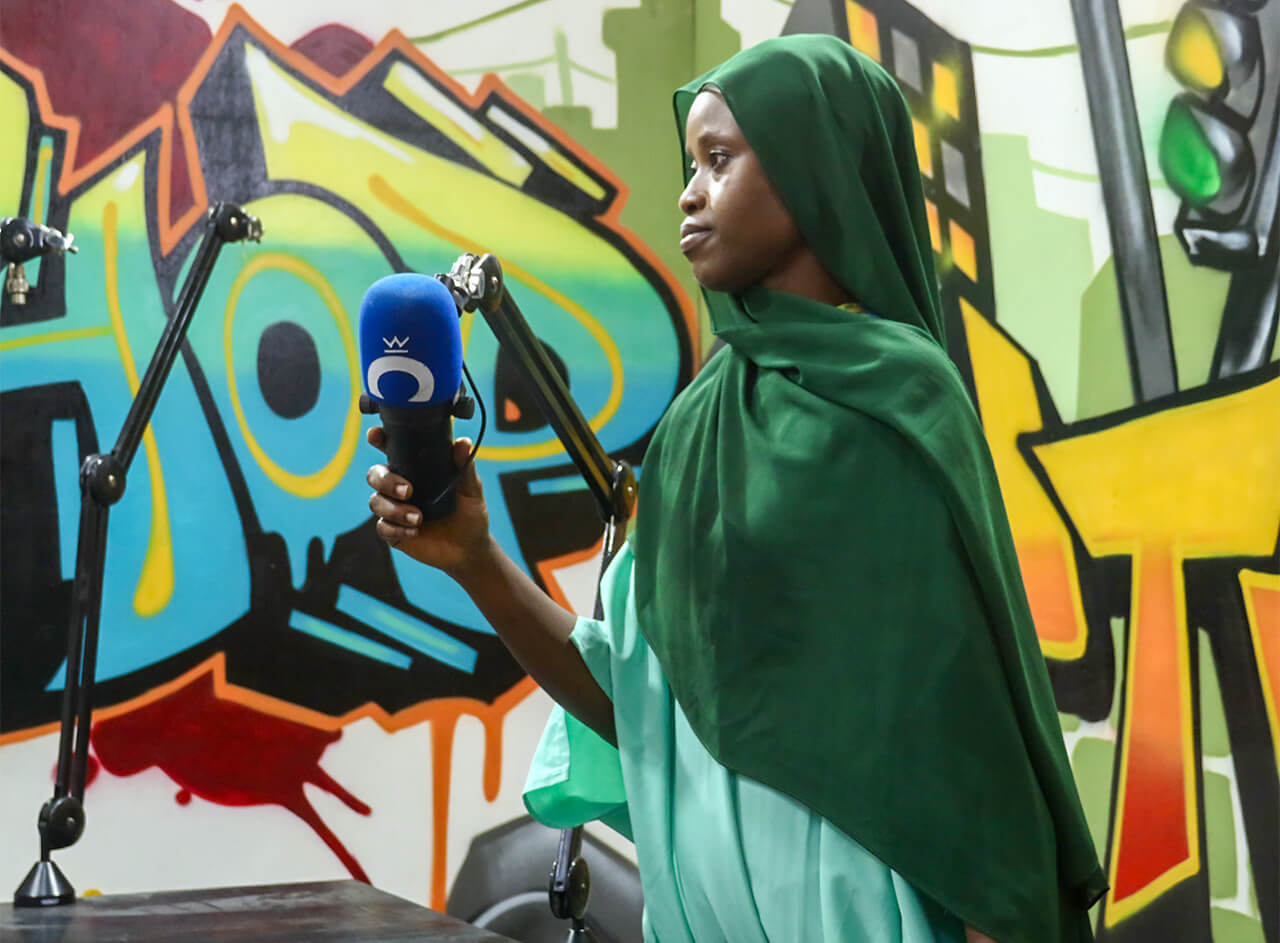
She is also the CEO of ONE NATION TV, a television channel entirely dedicated to urban cultures, which also highlights female rappers, notably with their flagship program “The Morning Nation hosted by Ninou.” This platform, located in Thiaroye, in the suburbs of Dakar, with experienced technicians, under the leadership of Camara, is responsible for editing InfoElles videos.
According to her, thecollaboration with Djiba has changed the lives of many women. She recalled a program that revealed the enormous difficulties behind the production of “gowe”—a type of perfumed wood incense—which is sold at a very low price. She believes that giving these women a voice has helped to raise the profile of their work.
“Once, we did an article on the women who make gowe. We showed the manufacturing process and the difficulties involved. It sells for 100 CFA francs. You can see all the work that goes into it. Through this report, we wanted to show that women who do craft work are paid less and receive less recognition,” she told bird. “This had an impact on the women, who gave us positive feedback.”
However, this momentum towards better representation of women in the media is hampered by the economic crisis affecting the Senegalese press. Alice Djiba attests that the survival of this type of initiative remains dependent on alternative models.
“The economic model of the media is currently problematic. The way we operate is that we are more project-oriented, even though we do produce content. But we have this background of working in project management and implementing projects related to women’s and girls’ rights. Even if we want to promote women’s rights in media content, it’s in the form of projects,” she said.
“We don’t wait for advertising to be able to operate. We work with non-governmental organizations (NGOs), women’s organizations,” she continued.
The agency is often called to produce content around a certain period, such as Women’s month or the 16 Days of Activism. In addition to this economic insecurity, there has been a notable decline in the presence of women in the media.
“Famedev brought the GMMP (Global Media Monitoring Project) study here to Senegal. They found that only 22% of women are represented in the media or speak in the media. That was in 2015. In 2021, we find ourselves with only 13%,” journalist and comms specialist Rosalie Ndiaye told bird.
According to Ndiaye, who serves as the president of the Association of Women in Media of Senegal (AFMS), these figures can be explained by a combination of persistent stereotypes, social resistance, and self-censorship.
“In the morning when you wake up and flip through the TV channels, you don’t even see any women on the sets. Women are not given a voice. Experts aren’t given a voice, even though they exist. You can find experts in every field,” Ndiaye said..
“But the problem is that these women don’t dare to come forward. Women don’t dare to speak up. There’s stigma and stereotypes that are also perpetuated in the media. It’s all very scary.”
For Djiba, the work is far from over. But surely, InfoElles, an ambitious media company, has already started making an impact.
Bird story agency
Summary not available at this time.