


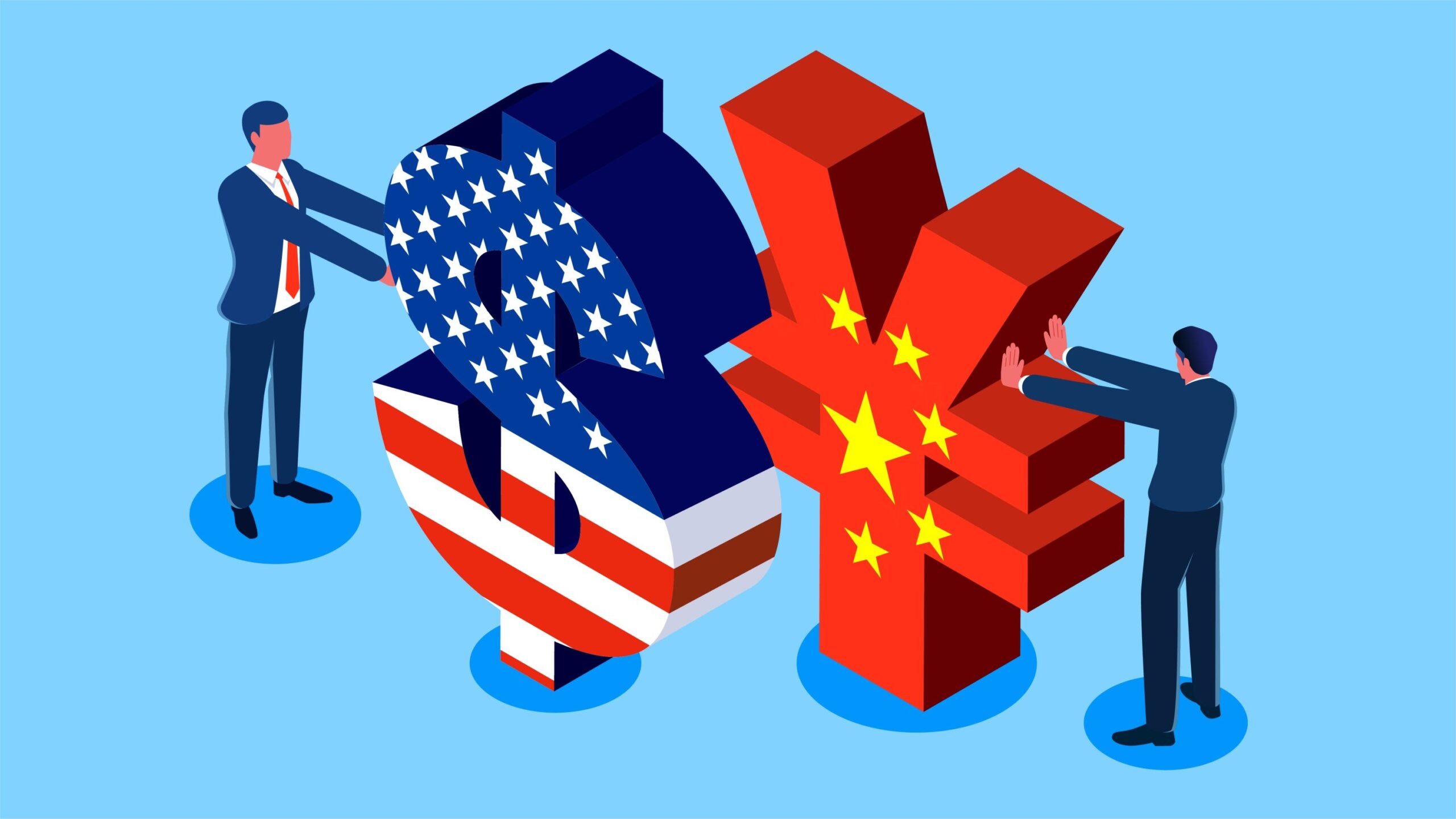
Africa’s most industrialized economies are looking to expand access to the world’s two largest export markets (the US-China market) as the two superpowers continue to compete for global influence.
Washington has offered most African countries a limited export access offer to AGOA through a 12 month’s extension until December 31 2026, with selective promise of bilateral deals. Beijing has countered Washington’s offer with zero export tarrifs and rapid market access scheduled to begin implementation early May.
Beijing has said it will eliminate tariffs on all products from 53 African countries with which it maintains diplomatic relations, subsequently extending zero-tariff treatment beyond the 33 mostly least-developed countries that previously enjoyed such access.
African economies are, however, not picking on a single partner; they are signing in all of them in a strategic race toward bigger export volumes. Latest moves by Kenya and South Africa shows these economies are eyeing the dual opportunities now at their disposal.
In the first week of February, South Africa announced it had signed a Framework Agreement on Economic Partnership for Shared Prosperity with China to help secure duty-free access for its exports into the Asian country.
South Africa’s trade ministry said an early harvest agreement is expected by the end of March 2026 to actualize free export access to China. South Africa is seeking to boost exports amid a tariff row with the United States.
“As China-South Africa relations continue to deepen, new opportunities emerge for South African businesses seeking to enter the Chinese market, particularly in sectors such as mining, agriculture, renewable energy and technology,” said South Africa’s Minister of Trade and Industry Parks Tau.
South Africa already exports citrus and rooibos tea to China and expects zero-duty treatment could significantly widen that basket to help buffer against uncertainty in the US. AgriSA, one of South Africa’s largest agricultural bodies, shows in its latest data that despite the uncertainty, South African exports increased by 26% to US$161 million in 2025, linking the surge to exporters making use of a temporary pause in higher US export tariffs.
While exports cooled down slightly in the third quarter, declining by 11% to US$144 million, AgriSA said the US still accounted for between 3% and 6% of South Africa’s total agricultural annual exports.
“Although this share may appear modest, it reflects the strong dependence of specific value chains on US market access. These industries support thousands of jobs in rural communities and form part of broader regional value chains across Southern Africa.
AgriSA views AGOA as a shared economic and development tool, which should not be utilised for political gain,” said AgriSA Chief Executive Officer, Johann Kotzé, in a statement.
“AgriSA reiterates its call for a longer-term renewal of AGOA. Greater predictability will strengthen confidence, deepen bilateral cooperation,” added Kotzé.
The Kenyan government said it was preparing a broader export expansion strategy targeting the Far East, Europe, parts of Asia, US, and intra-African trade under the African Continental Free Trade Area (AfCFTA).
On Trade with China, Kenya’s Trade, Investment and Industry Cabinet Secretary Lee Kinyanjui said the Early Harvest Arrangement was nearing conclusion and would open up vast opportunities for local exporters. The preliminary trade deal will grant 98 percent of Kenyan exports duty-free access to the Chinese market.
“We have finished what we call the Early Harvest Agreement and we hope by mid-March we should be signing it. Therefore, Kenyans who are in the export market will be able to access the Chinese 1.4 billion market, tariff-free,” Kinyanjui told journalists during a tour of the Export Processing Zones Authority (EPZA) in February.
At the same time, Kenya disclosed the government of Kenya through the president has engaged the U.S. government and it will be seeking to cushion itself against uncertainty surrounding the African Growth and Opportunity Act (AGOA).
“ We are currently at the final levels of negotiations where we are going to secure the market for Kenya beyond AGOA so that Kenya can have a bilateral agreement, trade agreement with the U.S. so that products that are made in Kenya can access the U.S. market, quota free, and with little or no tariffs,” said Kinyanjui.
Kenya’s Foreign Affairs Principal Secretary Korir Sing’oei reinforced the government’s dual-track approach where the East African economy is pursuing deeper access to China while pushing for renewed and expanded ties with Washington.
“We see no tension between our concluding a market access arrangement with China on one hand and our robust push for AGOA re-authorization as well as a separate Bilateral Trade Agreement with the United States on the other,” Sing’oei said on X.
According to data from the Observatory of Economic Complexity (OEC), Kenya’s exports to China fell by 27 percent from US $20.5 million to US$15 million between December 2024 and December 2025. Over the same period, Kenya’s imports from China rose by US$209 million to $1.11 billion. The year-on-year decline in Kenyan exports was driven largely by reduced shipments of scrap copper, tea and precious metal ore.
bird story agency
Summary not available at this time.