



By Sam-Eze Chidera Ifeakanwa: Preserving cultural relics goes beyond stuffy museums and dusty books for Ijeoma Onyejekwe. The archivist, researcher and urban planner is on a mission to bring cultural heritage into the everyday lives of Nigerians.
Ijeoma Onyejekwe sat at The Village Bistro restaurant in Enugu with a plate of abacha served with fried fish and garden eggs. She sipped fresh palm wine from a wooden cup and noted the nsibidi ideograms etched on the window frames and the raffia mat ceiling. To the casual diner, the popular restaurant might present a rustic aesthetic but for Onyejekwe, it represents a practical example of her work.
The researcher views spaces like The Village Bistro as evidence of her professional philosophy: heritage that generates revenue is heritage that survives.
“Culture is a lifestyle. It is our food, our architecture, even our security systems,” she told bird. “The more we monetise our culture, the more we preserve our economy. Once it is demonetised, it dies,” she explained.
Enugu, Nigeria’s “Coal City,” is the focal point of this preservation effort. While indigenes of Udi Hills had long known of the coal in their earth, industrial exploitation only began in 1909, following British mineral exploration. The city later served as the administrative headquarters for the Southern Province when Nigeria was a British colony and as the first capital of the short-lived Republic of Biafra.
Today, a city of more than 4 million people, Enugu remains an important cultural heritage in Igboland, housing historical sites ranging from the iron-smelting furnaces of Lejja to the Nsude Pyramids.
Onyejekwe, who is the Assistant Chief Monuments Officer for the National Commission for Museums and Monuments (NCMM), brings a specialised background to the role. A registered urban planner with a PhD from the Enugu State University of Science and Technology, she has spent her career bridging the gap between historical preservation and urban development.
Her achievements include the digital documentation and 3D restoration of the Busanyin Shrine at the Osun Osogbo Sacred Grove, a UNESCO World Heritage site, where she integrated high-tech laser scanning with traditional indigenous knowledge.
While a historian records the dates of a site’s founding, Onyejekwe conducts “cultural heritage impact assessments.” This involves evaluating how new infrastructure projects might physically encroach on a monument’s statutory “buffer zone” or disrupt the social fabric of a neighborhood.
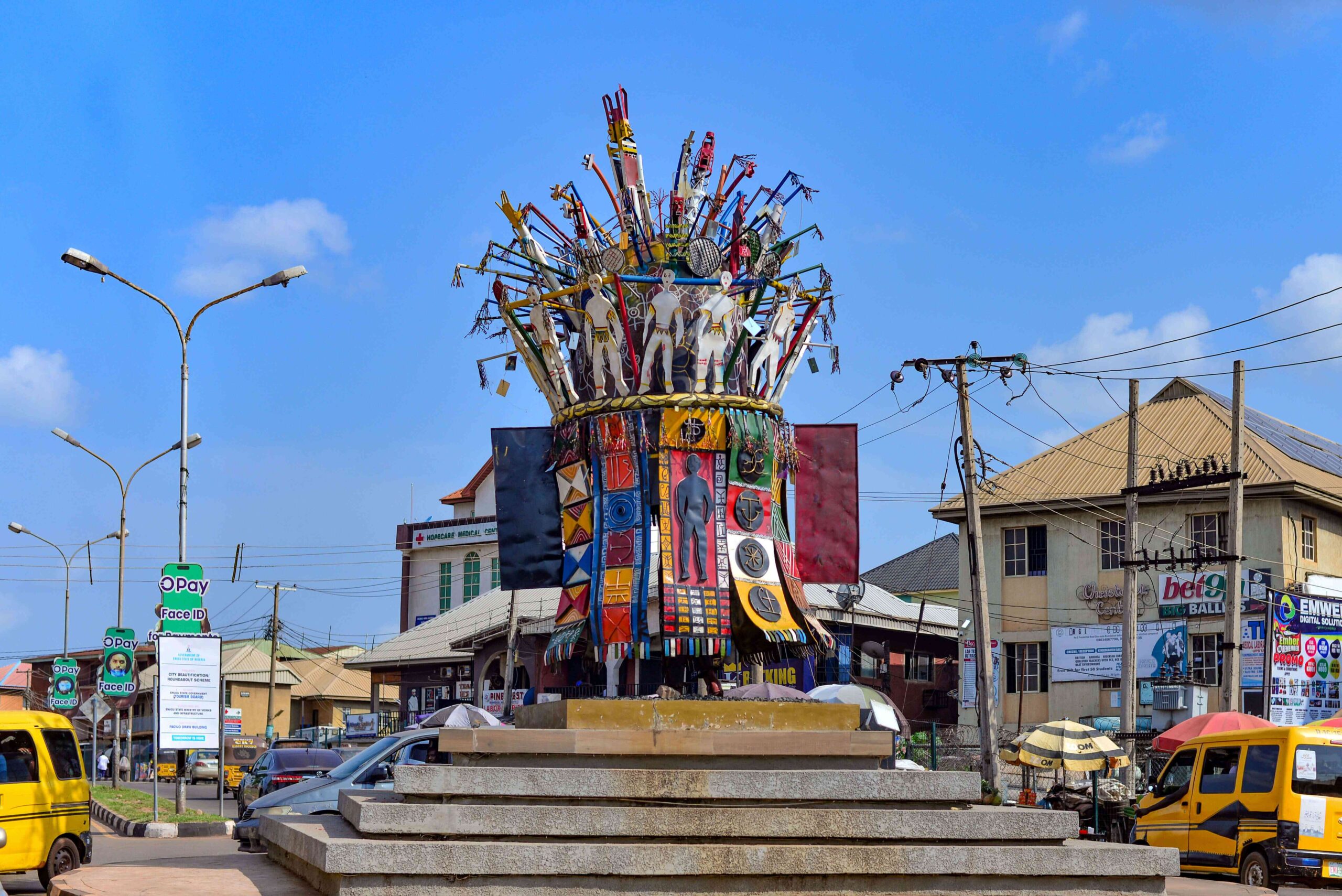
Her professional focus remains constant even outside the office. Driving through Enugu’s Onu Asata junction, she pauses at the sculpture of the Ijele, a prominent masquerade figure, to calculate the tourism potential of the area. Under a state-level roadmap, Enugu aims to grow its economy from $4.4 billion to $30 billion by 2030, supported by a N30 billion (21.2 million US dollars) investment in tourism infrastructure.
To Onyejekwe, these figures represent the potential for a “heritage trail” linking the city’s origins to the present. “The city needs to tell her stories,” Onyejekwe says. “We have colliery assets and old steam engines that provide the only physical evidence of our history. If we destroy them, we lose the narrative.”
A specific setback from 2021 remains a point of concern. At that time, the federal government sought to declare the Old Eastern House of Assembly and coal preparatory plants as national monuments. However, the designation failed due to conflicting jurisdictional claims over the land and delayed state-level administrative approvals.
“If we ignore these sites, we lose our monuments permanently,” she warns. “We need adaptive reuse, maintaining the authenticity of the site while making it economically beneficial today.”
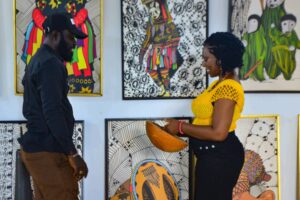
This work often brings her to the Centre for Memories (CFM), Ncheta Ndigbo. Established in 2017, the CFM is a private-sector partner to her work at the National Museum. During a visit to discuss reviving traditional cloth weaving and ancient iron-smelting techniques, technologies she argues are essential for Enugu’s cultural tourism plans, she meets with CFM Director Iheanyi Igboko.
“If we can stop the destruction of ancestral lands and artifacts, people will begin to see the opportunities,” Igboko says. “We all benefit if these things are preserved.”
Programs Manager Ifeoma Nnamani emphasizes the need for a shift in perspective. “We should leverage our indigenous knowledge, our herbs and our technology, rather than focusing solely on Western systems,” she says. The impact is measurable: according to Centre for Memories records, the facility has hosted more than 10,000 visitors.
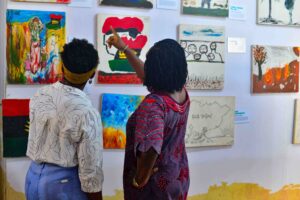
As she made her way out of CFM’s doors, an elderly woman paused at the gate, asking what was kept inside. Onyejekwe stopped to explain. She avoided technical terms about archives or monuments, speaking instead of the woman’s own history; the stories of coal miners and weavers.
“What do they do there?” the woman asked, peering at the entrance.
“They keep our strength,” Onyejekwe replied, holding the woman’s gaze. “Everything you and your parents did so we wouldn’t forget who we are is inside those walls.”
The woman looks at the building for a long moment, her expression shifting from curiosity to a quiet gravity, before nodding slowly and walking away.
For Onyejekwe, that moment of recognition is the objective. Archives are not just for researchers; they are a mirror for the public, intended to help each African generation recognise their own value in history.
(Abacha is a traditional Igbo dish of a shredded cassava.)
bird story agency
Summary not available at this time.