



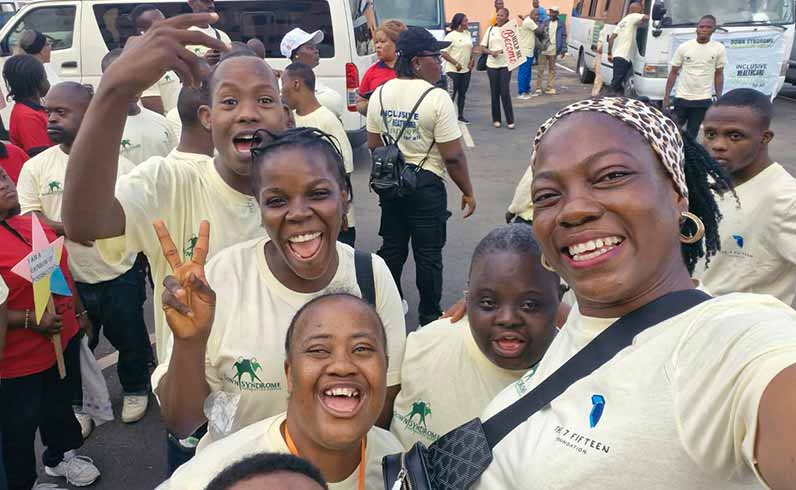
Globally, Down syndrome occurs in about 1 in every 700 to 1,000 live births. Nigeria, however, has reported a steady rise in cases over the past decade, most of which are identified long after infancy.
Such delayed diagnosis hinders early interventions that could significantly improve cognitive and social outcomes.
Thanks to several factors, medical professionals are reporting an increase in diagnosis. One is advanced maternal age, a well-established risk factor for Down syndrome. In urban Nigeria, more women are delaying childbirth for education, career development or economic stability.
“As maternal age rises, the likelihood of chromosomal abnormalities increases,” explains Ifunanya, a consultant paediatrician at the National Hospital Abuja.
Improved neonatal survival rates also play a role. Babies who might not have survived complications in the past are now living longer, ensuring that conditions like Down syndrome can be recognised.
For many Nigerian families, learning that their child has Down syndrome marks the beginning of a lonely and emotionally draining journey. Funke Adeyemi, an Abuja-based mother, describes the ensuing sense of stigma that came upon her in the wake of her six-year-old son’s diagnosis.
“People told me I must have angered God. Some said it was punishment. Others advised me to hide my child so she wouldn’t bring shame,” she recalled.
Such beliefs are not uncommon in Nigeria. In many communities, disability is still misunderstood as spiritual affliction or parental failure, forcing families into silence. Children with Down syndrome typically grapple with social ostracism—both in religious spaces and schools.
Early intervention, speech therapy, physiotherapy, and occupational therapy are widely recognised as essential for children with Down syndrome. In Nigeria, most of these services are scarce and expensive.
With just a handful of trained professionals nationwide, genetic counselling is limited. “Parents usually meet us years after birth, not during pregnancy or infancy. By then, critical developmental windows have passed,” notes Ifunanya, referencing the systemic weakness in Nigeria’s healthcare industry.
Amidst these hurdles, a movement of advocacy is emerging. Organisations like Down Syndrome Foundation Nigeria (DSFN) are leading awareness campaigns, training and policy engagement. According to DSFN, the past decade has seen a significant rise in parent support groups across Abuja, Lagos and other major cities. These networks offer emotional support and crucial education for affected families.
These advocacy efforts are also reshaping conversations within the medical community. Paediatricians are increasingly encouraged to discuss developmental milestones openly and refer suspected cases earlier. Across Abuja and Lagos, several private hospitals now partner with NGOs to offer subsidised early-intervention programmes, though access remains limited.
Inclusive education is another emerging frontier. A growing number of schools are adapting teaching methods to accommodate children with Down syndrome, using individualised learning plans and trained aides. Still not many families can afford to enrol their wards in these schools because of their heavy costs.
What’s more, therapy sessions can cost tens of thousands of naira monthly, often without insurance coverage, forcing many parents to quit jobs in order to provide full-time care.
As diagnosis rates increase, Nigeria must move beyond awareness toward sustainable policy frameworks that support children with disabilities across healthcare, education, and social welfare systems.
Ifunanya, the Abuja-based consultant paediatrician, recommends mandatory developmental screening in early childhood, expanded training for healthcare workers and public education campaigns to dismantle stigma.
For Nigeria, this means confronting a long-standing neglect of this crisis, embracing difference and fostering inclusive systems for those with the condition.
Summary not available at this time.