


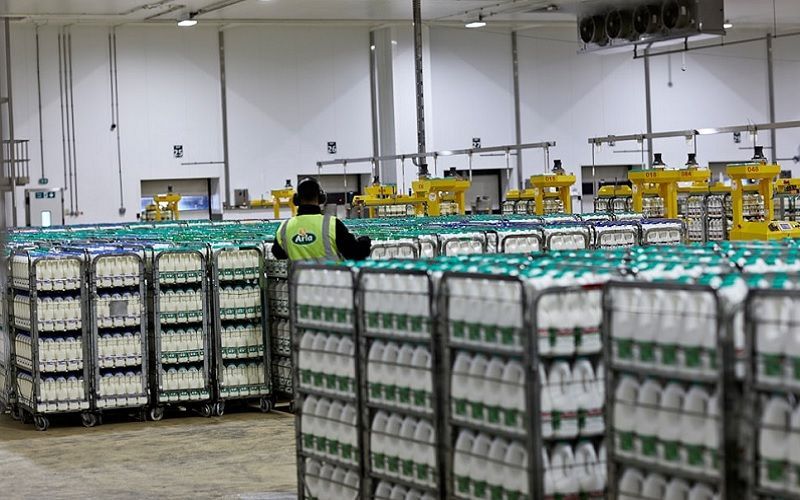
Nigerian per capita milk consumption stands at 8.7 litres, barely sufficient for tea during the rainy season. According to government officials, this represents less than 5% of the World Health Organization’s recommendation of 210 litres per person.
Local production meets less than 40% of national demand, with over 90% originating from smallholder pastoralists operating informal systems where milk collection for commercial purposes remains minimal.
Women play a large role in this informal sector, processing cow milk into traditional products while managing distribution. Yet their contributions rarely enter formal markets or large-scale distribution chains.
The structural deficit underscores deeper failures in breeding programmes, extension services, cold chain logistics and market integration—all of which have condemned Nigeria to perpetual import dependency.
Arla Foods has positioned itself at the forefront of transforming these dynamics through comprehensive interventions spanning production, processing, capacity building and knowledge transfer.
During its 2025 Arla-Dano Farm Open Day in Damau, Kaduna State, the company showcased the state-of-the-art dairy facility described as one of its kind in West Africa.
The farm operates advanced cow-monitoring systems, prioritises animal welfare through free-range housing with sand bedding and specialised cooling systems, and deploys solar-powered technology for milk cooling, ensuring high-quality standards.
Current milk yields at the Damau farm average approximately 30 kilograms per cow daily, with plans to reach 35 kilograms. The 400-hectare facility houses Danish Holstein cows whose genetics and management demonstrate possibilities when expertise, technology and investment align purposefully.
The company commissioned a yoghurt factory adjacent to the farm, producing Cool Cow yoghurt with 100% fresh milk sourced directly from the facility.
This vertical integration transforms raw milk into nutritious products made in Nigeria for Nigerians, creating commercial value while building consumer confidence in locally produced dairy.
Arla’s strategic vision extends beyond its own operations through the Nigerian Dairy Centre of Excellence launched at the open day.
The centre serves as a national platform for training, research and knowledge sharing targeting farmers, students, veterinarians and industry professionals, aiming to professionalise dairy farming and develop skilled manpower for the sector.
This capacity building addresses fundamental constraints where limited extension services, unhygienic handling practices, and poor farm management skills impede sustainable industry development.
The farm relies on solar energy, recycles manure as fertiliser and applies efficient irrigation systems on surrounding fields.
Arla has invested approximately 10 million euros in the Damau facility, with an additional $20 million committed for milk processing plant construction.
This ambitious local sourcing target confronts various obstacles. Nigeria has not completed an animal census in almost 20 years, making data-driven planning difficult.
Most pastoralists live on the fringes of the formal economy in remote northern regions where poverty, low education levels and limited infrastructure shape daily existence.
Geographic and socioeconomic isolation severely limits integration between producers and processors, milk collection networks remain weak, quality control is inconsistent, cold chain infrastructure is inadequate and formal buyers rarely reach pastoralists at scale.
High costs associated with veterinary care and artificial insemination impede genetic improvement programmes.
Farmer-herder conflicts over land rights continue generating violence that disrupts activities. The informal sector’s dominance means that policy interventions struggle to achieve scale since most milk never enters commercial value chains.
Yet collaboration with the Kaduna State Government has proven critical to Arla’s success, providing infrastructure support, land access and enabling regulatory environments allowing innovation to scale.
Arla serves as an off-taker for milk from these settled households, creating integrated value chains linking smallholder producers to industrial processors through structured arrangements replacing exploitative middlemen.
But the challenge involves scaling proven models across fragmented landscapes where infrastructure deficits, institutional weaknesses and policy inconsistencies constrain replication.
Arla’s commitment to sourcing half its milk locally represents a bold vision; however, fulfilment hinges on other players such as government agencies, development partners, input suppliers and financial institutions.
Summary not available at this time.