


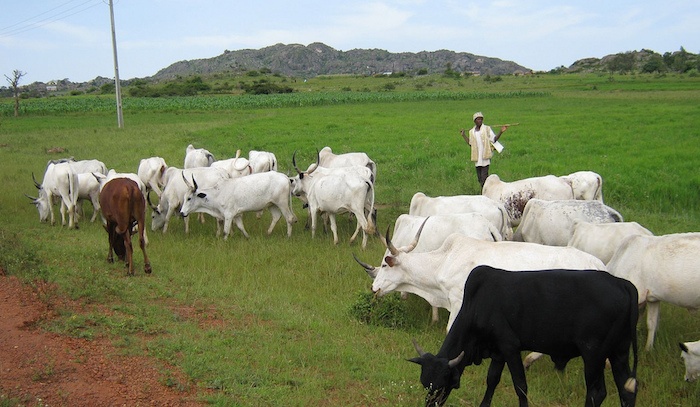
The Federal Government’s decision to embark on a phased grazing reserve development programme marks a significant policy shift in Nigeria’s long-standing livestock and land-use challenges.
Beginning with pilot reserves in Gombe State, Plateau State and the Federal Capital Territory, the initiative signals renewed recognition of pastoralism as a structured economic activity rather than a subsistence survival system.
By situating the programme within the Ministry of Livestock Development and linking it to social infrastructure—such as schools, healthcare facilities, access roads and veterinary services—the policy seeks to align livestock management with broader rural development objectives.
Despite its promise, the limited geographical scope of the pilot phase has raised concerns among agricultural and livestock stakeholders.
While widely regarded as a step in the right direction, the pilots are confined to a few locations and do not reflect Nigeria’s diverse ecological zones and regional realities.
Calls for at least one grazing reserve in each geopolitical zone underscore the perceived mismatch between the scale of Nigeria’s livestock population and the pace of implementation.
The debate, therefore, centres not on whether grazing reserves are necessary, but on whether the policy design is sufficiently inclusive, balanced and scalable to deliver nationwide impact.
Beyond grazing reserves, Nigeria already has several complementary policy instruments capable of strengthening livestock reform.
Chief among these is the National Livestock Transformation Plan (NLTP), which aims to modernise livestock production, reduce farmer–herder conflicts, and promote ranching and semi-sedentary systems.
The NLTP emphasises integrated livestock development through improved pasture cultivation, water infrastructure, animal health services and market access.
If effectively aligned, grazing reserves can serve as physical anchors for implementing the NLTP—clearly defined spaces where interventions are coordinated, monitored and sustained.
Additional support mechanisms exist through agricultural value-chain development programmes facilitated by the Bank of Agriculture and the Nigeria Incentive-Based Risk Sharing System for Agricultural Lending (NIRSAL Plc).
These initiatives seek to boost productivity, expand access to finance, and improve market linkages for agribusinesses involved in dairy production, meat processing, and animal feed.
When grazing reserves are connected to organised value chains—through milk collection centres, feedlots and cold-storage facilities—they can help transition pastoralism from subsistence activity to commercial enterprise, raising incomes while reducing migratory pressures.
Land-use planning frameworks also offer critical alternatives and complements to grazing reserves. State-level land administration systems, guided by the Land Use Act and supported by geographic information systems, can help designate livestock corridors, fodder banks and mixed-use agricultural zones.
In areas where formal grazing reserves face political, ecological or social constraints, these planning tools provide flexible options for managing livestock movement while minimising encroachment on farmlands.
Climate adaptation programmes represent another essential layer of intervention. Policies implemented under the National Climate Change Policy and the Agricultural Promotion Policy promote climate-smart agriculture, including drought-resistant pasture species, water harvesting systems, and early warning mechanisms.
Integrating climate-smart practices into grazing reserves and surrounding communities would enhance resilience to climate variability—one of the key drivers of transhumance—and reduce competition over increasingly scarce natural resources.
Conflict prevention measures extend beyond physical infrastructure. Community-based peacebuilding initiatives supported by national and international development partners emphasise dialogue, mediation and joint resource management between farmers and pastoralists.
These programmes recognise that infrastructure alone cannot resolve conflict without trust, clear rules and shared benefits.
Embedding such mechanisms into the governance structures of grazing reserves would strengthen local ownership and long-term sustainability.
Livestock traceability and identification systems are also gaining prominence within sector reforms. Digital tagging, animal health records and movement-tracking technologies can improve disease control, market transparency and security.
When combined with grazing reserves, these systems support better regulation and planning, addressing concerns around insecurity and informal livestock movement.
Ultimately, while the current grazing reserve pilots represent an important policy signal, their effectiveness will depend on how well they are expanded and integrated with existing frameworks.
Aligning the programme with national livestock transformation plans, value-chain financing, land-use planning, climate adaptation strategies, conflict-resolution mechanisms and traceability systems is essential.
Only a multi-layered, nationwide approach—rather than isolated pilot sites—offers a realistic pathway to modernising Nigeria’s livestock sector, reducing conflict and promoting inclusive rural development
Summary not available at this time.