


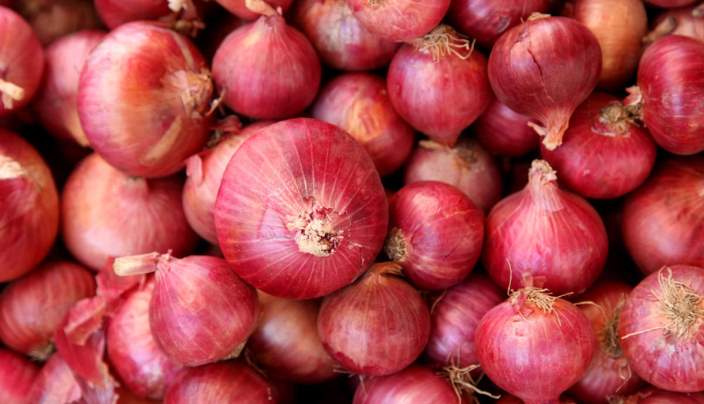
The provision of agro inputs to over 2,000 onion growers across Borno, Yobe, Sokoto and Kebbi States is the latest effort to safeguard the agricultural industry from climate-related disasters, such as flooding.
The intervention, which was led by the National Agricultural Development Fund (NADF), in partnership with the Federal Ministry of Agriculture and Food Security, offers significant benefits to the national value chain for food security.
In 2024, floods destroyed farmlands and storage facilities, lowering incomes for many households in these mainly agrarian areas.
The recent intervention, led through the distribution of inputs such as fertiliser, high-quality onion seed and agricultural chemicals, aims to regain production capacity and avert a potential shortage
A medley of structural mechanisms is emerging to make Nigeria’s agricultural system more resilient. The Renewed Hope Agenda offers a framework for agriculture, covering food security, agribusiness financing and value chain development.
Based on the Renewed Hope Agenda, the responsibility lies with the likes of the NADF, the Bank of Agriculture, and the Nigeria Incentive-Based Risk Sharing System for Agricultural Lending (NIRSAL) in Nigerian agricultural activities, particularly the improvement of farmers’ access to inputs, finances, and management of agricultural risks.
Input support programmes are among the most visible interventions. The schemes initiated by the Federal Ministry of Agriculture and Food Security, among them the National Agricultural Growth Scheme, have primarily concentrated on distributing fertilised feed lubricated by cheap fertiliser as well as new seed types.
Within flood-vulnerable zones, schemes have increasingly been combined with elements of climate-smart agriculture to favour early-maturity crops.
Another intervention that is already being applied is the resilience of agricultural value chains. The National Onion Development Initiative and commodity aggregation initiatives aim to minimise post-harvest losses.
Cold storage, commodity aggregation and cooperative marketing networks are responsible for ensuring that farmers receive stable prices, more so when output declines due to the effects of climate change.
The Nigerian Agricultural Insurance Corporation (NAIC) offers protection against floods, pests, and diseases, although the penetration level is low.
Initiatives by NIRSAL and other insurers to offer bundled services for input funding and loans are slowly extending the reach to provide farmers with protection against catastrophic losses because of disaster occurrences.
At the sub-national level, state administration in the region has implemented measures that are complementary in nature, including irrigation scheme rehabilitation, flood control scheme construction and the extension of services related to climate change adaptation.
Dry-season farming under irrigation in Kebbi and Sokoto States, for instance, makes agriculture in the region less rain-dependent.
International partners offering solutions to the problem include international development partners. The programmes developed by organisations like the Food and Agriculture Organisation and the World Bank emphasise building climate resilience, warning systems and training farmers.
NADF’s intervention highlights the significance of government support in tackling climate-related challenges. While distribution of input will enable farmers to go back to their farms immediately, strong policies, value chains, insurance, irrigation and climate-resilient agriculture make for more sustainable solutions
Summary not available at this time.