



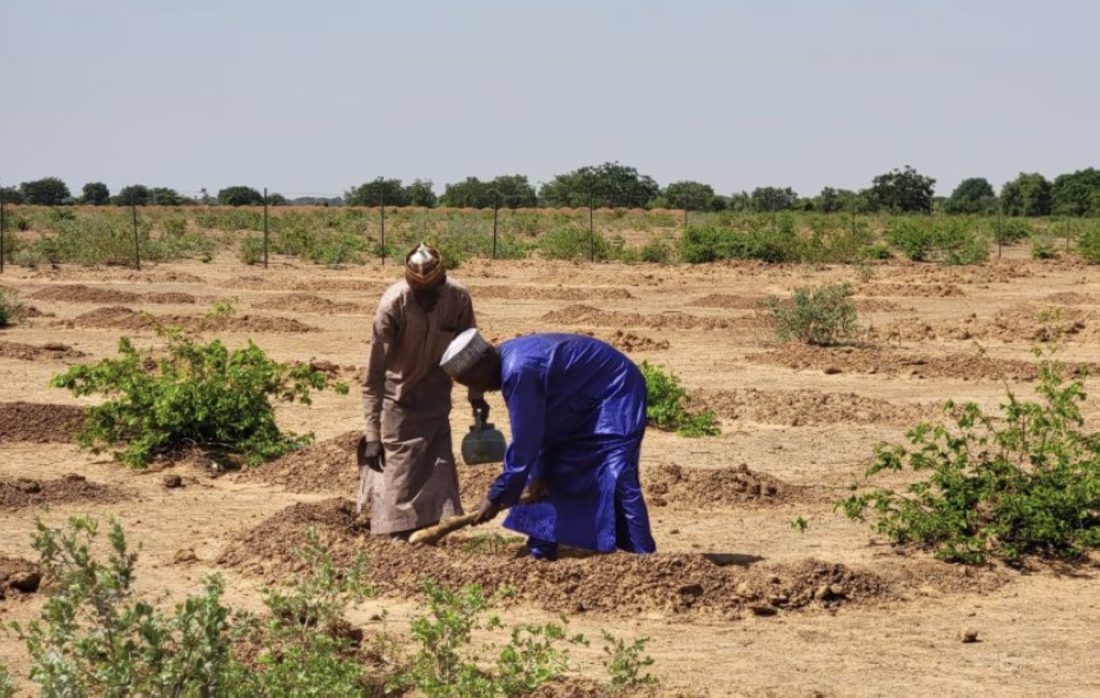
The revelation that 33% of Nigeria’s soil is already degraded exposes a structural crisis that extends far beyond agriculture. It is a threat deeply intertwined with food security, rural livelihoods, climate resilience, and the country’s long-term economic sustainability
Soil degradation on this scale is largely driven by unsustainable land use, weak enforcement of soil conservation policies, climate pressures, and agricultural practices focused on short-term yields rather than long-term sustainability.
Given that it can take centuries to restore degraded soil, the situation underscores the urgency of shifting from reactive, post-crisis interventions to a deliberate, long-term approach to soil management.
This warning was amplified during activities marking World Soil Day, which placed soil health at the centre of Nigeria’s development conversation.
Increasingly, soils are no longer viewed merely as agricultural inputs but as critical infrastructure that underpins food sovereignty, climate stability, water regulation, and biodiversity.
This perspective aligns with modern development thinking that treats soils as a finite, non-renewable resource whose degradation compounds the challenges of climate change and population growth.
While several initiatives have emerged to address the problem, their overall impact remains dependent on scale, coordination, and sustained political commitment
One notable intervention is the Nigerian Soil Health Programme for Farmers (NFSHS). The programme promotes the use of fertilisers tailored to specific crops and ecological conditions, helping to reduce excessive and inefficient fertiliser application—one of the contributors to soil degradation.
Beyond fertiliser management, the initiative encourages the use of organic inputs, environmentally sound practices, and location-specific farming approaches, marking a departure from blanket agricultural prescriptions. Guided by the principles of climate-smart agriculture, the programme demonstrates that productivity and conservation can be mutually reinforcing rather than opposing goals.
At the regional and continental level, the Soil Values initiative offers a more integrated response. Aimed at restoring two million hectares of degraded land and strengthening the resilience of 1.5 million farmers across the Sahel, the initiative combines agroecological practices with market systems and policy reform.
Its focus on soil valuation represents a significant shift—elevating soil health from an invisible background factor to a measurable economic asset within national accounting frameworks.
The Soil Values programme is supported by a strong multi-institutional partnership involving the International Fertiliser Development Centre (IFDC), Wageningen University, AGRA, and the International Water Management Institute.
These collaborations reflect a growing recognition that soil degradation is a cross-sectoral challenge spanning agriculture, climate, water management, research, and rural development.
Institutional collaboration is also evident at the national level, with support from the Federal Ministry of Agriculture and Food Security and the Nigerian Institute of Soil Science.
These bodies play a critical role in translating research into policy, farmer education, and national soil mapping. However, significant gaps persist at the grassroots level, where smallholder farmers continue to face financial constraints and limited access to knowledge.
Another defining feature of current interventions is the growing emphasis on Integrated Soil Fertility Management (ISFM) and soil and water conservation practices.
Techniques such as the use of organic matter, improved seed varieties, crop rotation, and erosion control are designed to enhance productivity while safeguarding sustainability. Their success, however, hinges on effective capacity building—an area where Nigeria still faces notable challenges.
The emphasis on social inclusion, particularly for women, youth and people with disabilities, also indicates a paradigm shift in agricultural development ideologies. It is the most vulnerable people who are adversely impacted by land degradation, as they are dependent on the land for a living.
Ultimately, Nigeria’s soil crisis is less about the absence of programmes and more about weaknesses in coordination, implementation, and scalability. The existence of initiatives such as the Nigerian Soil Health Programme and Soil Values reflects genuine commitment.
What is now required is strategic investment and stronger alignment of soil health within the national climate change framework—an essential step toward securing Nigeria’s food future and contributing to Africa’s broader sustainability goals.
Summary not available at this time.