



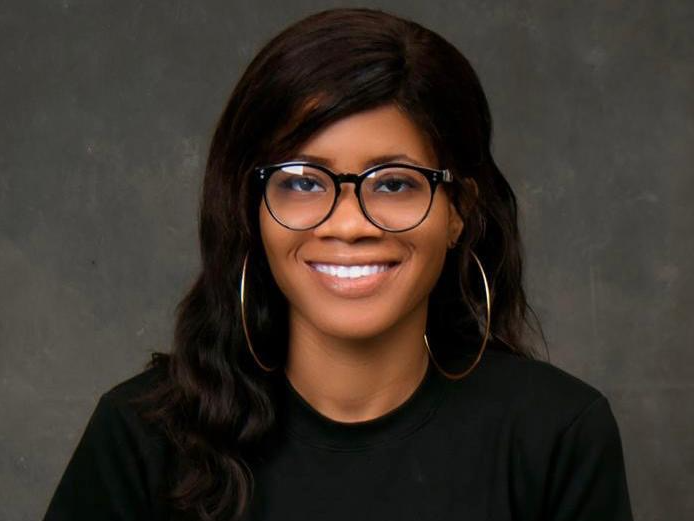
First, Esther Chinenye Eruchie lost her brother: an autistic young man who had finally become verbal after multiple surgeries, only to die in his early twenties.
It wasn’t long before her mother, a matron at an oil-servicing firm, slipped into clinical depression. She made frequent errors at work and couldn’t remember faces—signs of incipient dementia.
Following the diagnosis, the family sought help in prayer houses. As a result, the treatment regimen was not consistently followed. But prayers alone weren’t enough. One day, Eruchie’s mother slumped and died.
That personal tragedy became the catalyst that ultimately led Eruchie in February 2023 to establish FriendnPal, a one-of-a-kind mental-health platform that leverages artificial intelligence. The medium serves over 12,000 users across 9 languages, including Yoruba, Swahili, Zulu and Arabic.
While her mother’s death had largely influenced her journey into mental-health technology, Eruchie also drew on the stark realities she encountered while working on human trafficking cases across Africa, including Cameroon and Libya.
“One thing I saw that a lot of organisations were not doing was the lack of mental health support,” she explains. “They [trafficking survivors] were going through stigma, trauma, anxiety.”
Statistics by the International Labour Organisation show that roughly 27.6 million people worldwide are trapped in forced labour and faced with severe mental-health challenges. Meanwhile, WHO estimates that one in four people will be affected by mental or neurological disorders at some point in their lives
Despite these growing concerns, most African countries allocate less than 1% of their health budgets to mental health.
With a degree in International Law and Diplomacy and certifications in public health from the University of Toronto, Eruchie never envisaged a career as a software engineer.
Once she realised that advocacy alone wasn’t enough, she sought a solution that became FriendnPal. “An average African man is solution-oriented. You tell him this is a problem, he’ll say, ‘Wait, what’s the solution?’ That’s why it’s easier for Africans to be drawn to pastors and religious gatherings because miracles happen.”
Battling with ADHD has also sharpened her perception of mental-health realities. “I understand what it feels like to be often not seen, unheard, or often overlooked.
FriendnPal stands out for its innovative features rooted in African realities. The platform employs behavioural analytics, voice patterns and message sequences to provide early mental-health diagnosis, thereby leveraging global frameworks such as GAD-7, PHQ-9 and ASQ-11.
With just a username and password, users can sign up to access features such as mood trackers and ASMR sounds as well as receive professional support in local dialects. The platform can also be synchronised with WhatsApp without requiring an app download.
For those in remote areas, navigating the platform is as simple as making a phone call and receiving support in under a minute.
“People feel safe using the platform because nobody knows their identity, which is what everybody wants,” Eruchie remarks.
Beyond its round-the-clock AI companion, FriendnPal uses a triage system to connect users with human therapists for sessions costing as low as 5,000 naira—or $5 outside Nigeria.
Eruchie is also developing one of the largest mental-health data banks in Africa. “One of the reasons why mental health is also underfunded is lack of data to back mental health conversations,” she explains.
She also adds that the platform is creating a documentation system that would enable users to transfer their mental-health records across borders. All data is anonymised, ensuring user privacy.
In just over a year of operation, FriendnPal has earned credit for its increasing contributions to Africa’s mental-health landscape. Some of its recognitions include the Cascado Pact Prize and the Banking on Women’s Health, including a 2024 award for the Best AI Product/Service of the Year by Technet Africa.
Alongside its partnership with Nigeria’s National Agency for Prohibition of Trafficking in Persons, the platform is also recognised by the United Nations youth Mental health Board for Africa and is a member of the International Brain Research Organisation. Recently, it expanded beyond Africa to Qatar and Egypt.
“We’ve seen about 25% increase in our revenue growth, which has been so interesting for us,” notes Eruchie, crediting her co-founder Kayode Adeshina for being her anchor during challenging moments.
Among the biggest challenges facing mental health in Africa is the way it is framed. Labels like ‘depression’ or ‘schizophrenia’ are incorrectly used to describe types of mental-health challenges.
Worse, as Eruchie explains, constant stress, long working hours and the absence of rest are rarely recognised as mental-health struggles, despite being the precursors of many conditions.
For all the demands of managing a tech startup, Eruchie maintains a light approach. “I’m a fun founder. If you ask anybody on my team, I think I’m like one of the most fun founders you could see in this space,” she laughs.
A fan of the English football club Arsenal, Eruchie sometimes plays football with local boys in the communities where she serves. While she enjoys dance and party, she admits that eating is a coping mechanism during stress.
Meanwhile, FriendnPal is set to commence its partnership with NAPTIP in the first quarter of 2026, while it works towards reaching five million users within the next three to five years.
Summary not available at this time.