



Nigeria’s food inflation crisis has reshaped household budgets over the past two years, though 2025 has brought unexpected relief.
After food inflation peaked at 40.87% in June 2024, the year 2025 witnessed a dramatic reversal.
By October 2025, food inflation had plummeted to 13.12%, down from 16.87% in September, marking the lowest rate in five years.
Nigeria even recorded its first month-on-month food deflation in over 13 years in September 2025, with prices actually falling by 1.57%.
Despite this broader improvement, tomatoes remained among the most volatile commodities throughout 2024 and early 2025, with prices fluctuating by over 250% compared to 2023 levels during peak shortage periods.
December represents Nigeria’s most intensive celebration period, when families gather for Christmas feasts and countless end-of-year celebrations that define the nation’s festive culture and New Year parties.
At the heart of these gatherings sits Nigerian jollof rice, the country’s beloved signature dish that has become synonymous with celebration itself.
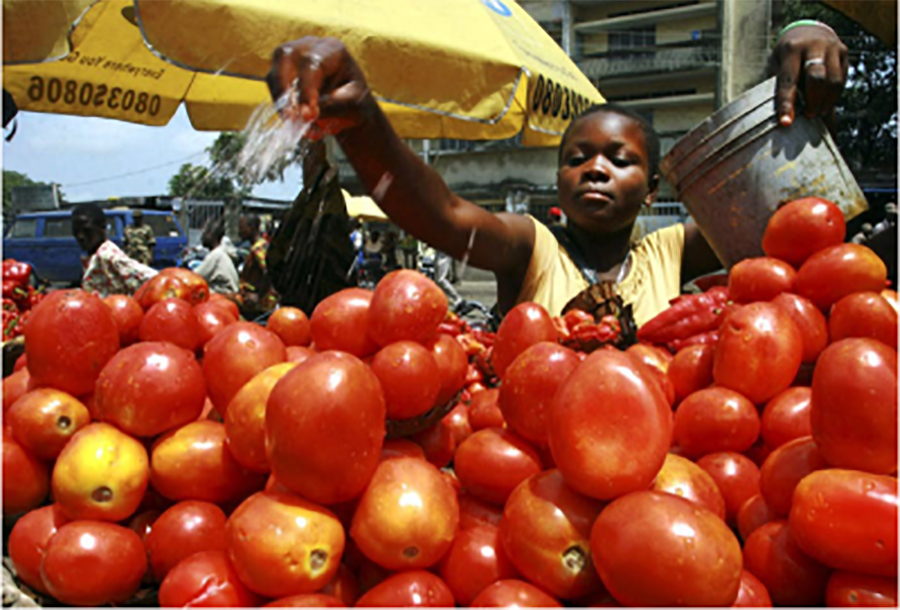
Without tomatoes, the vibrant red stew that accompanies every significant meal becomes impossible. The vegetable serves as the foundation for many Nigerian delicacies. No wedding reception proceeds without it. No birthday celebration feels complete without the familiar red hue of tomato-based dishes.
Recent market developments signal a dramatic reversal in what had been a fluctuating year for tomato consumers. Farmers across northern Nigeria report unprecedented harvest volumes entering markets at precisely the moment demand peaks for festive preparations.
The supply surge has triggered a price collapse that few anticipated just weeks ago. In major producing regions, a 50-kilogram basket that recently commanded between N40,000 and N60,000 now sells for just N15,000 to N16,000. This represents a price reduction exceeding 70% within mere weeks.
Multiple production zones have synchronised their harvests in an almost providential alignment with festive demand, with many farms not yet reaching peak harvest, meaning current supply represents merely the beginning of an extended period of abundance.
This price correction arrives as profound relief for Nigerian households already strained by relentless economic pressures over the past two years.
Research by SBM Intelligence documented that the average cost of cooking a pot of jollof rice for a family of five skyrocketed by 153% between March 2023 and June 2024, climbing to N27,528.
Rice prices alone surged by 66%, with a 50-kilogram bag jumping from N60,000 in December 2023 to N100,000 by late 2024. When tomato prices simultaneously peaked during the mid-year shortage, many families eliminated jollof rice entirely from their menus.
The contrast with previous festive seasons illuminates the magnitude of current relief. This year’s current price of N15,000 to N16,000 in northern markets for now actually undercuts last year’s festive season pricing, despite broader inflationary pressures affecting virtually every other commodity.
The mid-2024 tomato crisis provides even starker contrast. Between April and June, when seasonal rains disrupted supply chains, prices exploded to N150,000 per basket in some markets, effectively pricing the vegetable beyond reach for most Nigerian households.
For families planning Christmas 2025 celebrations, the current abundance translates into restored possibilities.
A household that allocated N40,000 to N60,000 for tomatoes in their festive budget can now redirect those savings toward other essential ingredients or stretch their celebrations to accommodate more guests.
The psychological impact extends beyond mere economics. After months of making painful substitutions, families can now prepare meals that reflect their traditions rather than their limitations.
Christmas and New Year celebrations in Nigeria transcend religious observation, functioning as crucial moments when extended families reunite, communities strengthen bonds, and cultural identity finds expression through shared meals.
Market dynamics reveal that current conditions reflect agricultural productivity. Multiple production zones simultaneously entering harvest season creates competitive pressure that benefits consumers.
This natural market correction offers hope that improved agricultural planning could stabilize prices year-round, reducing the extreme volatility that has characterized tomato markets.
The window for maximum benefit remains open through the festive season, with families purchasing in bulk and preserving excess through sun-drying or freezing to lock in savings.
Summary not available at this time.