

While Nigeria’s coverage for full vaccination was 35.6% in 2021, roughly 18% of children aged 12-23 months received no routine vaccines, according to a joint survey by the Multiple Indicator Cluster Survey and the National Immunisation Coverage.
To put this into perspective, more than 2.2 million children across the country received zero doses, marking one of the largest unvaccinated populations worldwide.
This deficit is particularly acute in the country’s northwest region, where 45% of children have received no immunisations. At least 57.5% more remain underimmunised.
In 2024, six states—Sokoto, Zamfara, Kebbi, Gombe, Kano and Katsina—accounted for 63% of Nigeria’s total circulating vaccine-derived poliovirus type 2 cases, with Sokoto recording the highest burden at 23 cases.
Similarly, northern states—including Borno and Kebbi—accounted for the majority of measles cases reported between January and October this year.
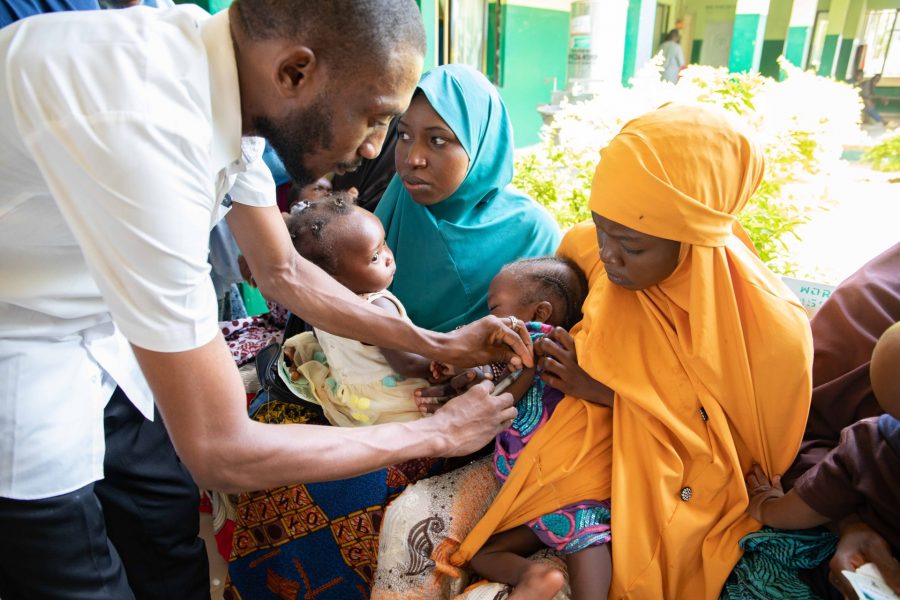
A new immunisation campaign by the Zamfara State Government aims to bend the epidemic curve in the state.
Deploying 1,997 vaccination teams, the scheme will provide vaccines against common childhood diseases like polio, measles and rubella. The campaign targets 1.2 million children statewide.
Vaccination works by giving the body a safe preview of a disease so the immune system can learn to fight it without the person ever getting sick. A vaccine contains a weakened, inactivated or harmless piece of a virus or bacteria, which triggers the immune system to produce antibodies and create memory cells.
These memory cells stay in the body for years, enabling the immune system to detect and attack germs quickly, while preventing illness or greatly reducing its severity.
Immunisation provides community-wide protection, helping to shield those who cannot be vaccinated.
Outside Zamfara, several Nigerian states have recently undertaken aggressive immunisation drives.
Kano launched a polio vaccination campaign between September 28 and October 1, 2024, aiming to reach 3.5 million children across all 44 local government areas.
Also, Lagos kickstarted its vaccination campaign in October to a wild reception. More than 3 million children, representing 85% coverage across the state, received shots against measles.
Research even confirms the economics of immunisation. The World Health Organisation estimates that every dollar invested in childhood immunisation yields roughly $44 in economic returns through reduced healthcare costs, prevented disabilities and preserved productivity.
Yet challenges like cultural resistance, insecurity and logistical constraints undermine the impact of immunisation efforts in northern Nigeria.
In some communities, misinformation and mistrust abound, cramping vaccination efforts.
To bypass this, many campaigns have relied on religious and traditional leaders while providing, in local dialects, precise information about vaccines and their safety.
Inadequate cold-chain infrastructure equally compromises vaccine potency in remote areas.
Zamfara State experience will contribute valuable lessons for scaling effective immunisation strategies across Nigeria’s most vulnerable regions, potentially saving thousands of young lives from entirely preventable diseases.
Nigeria’s recent state campaigns are necessary but they must be anchors for longer-term change: to convert one-off reach into routine protection, to turn temporary coverage spikes into steady upward trends, and to make sure every child, wherever they live in Nigeria, receives the basic vaccines that modern public health can deliver.
Summary not available at this time.