



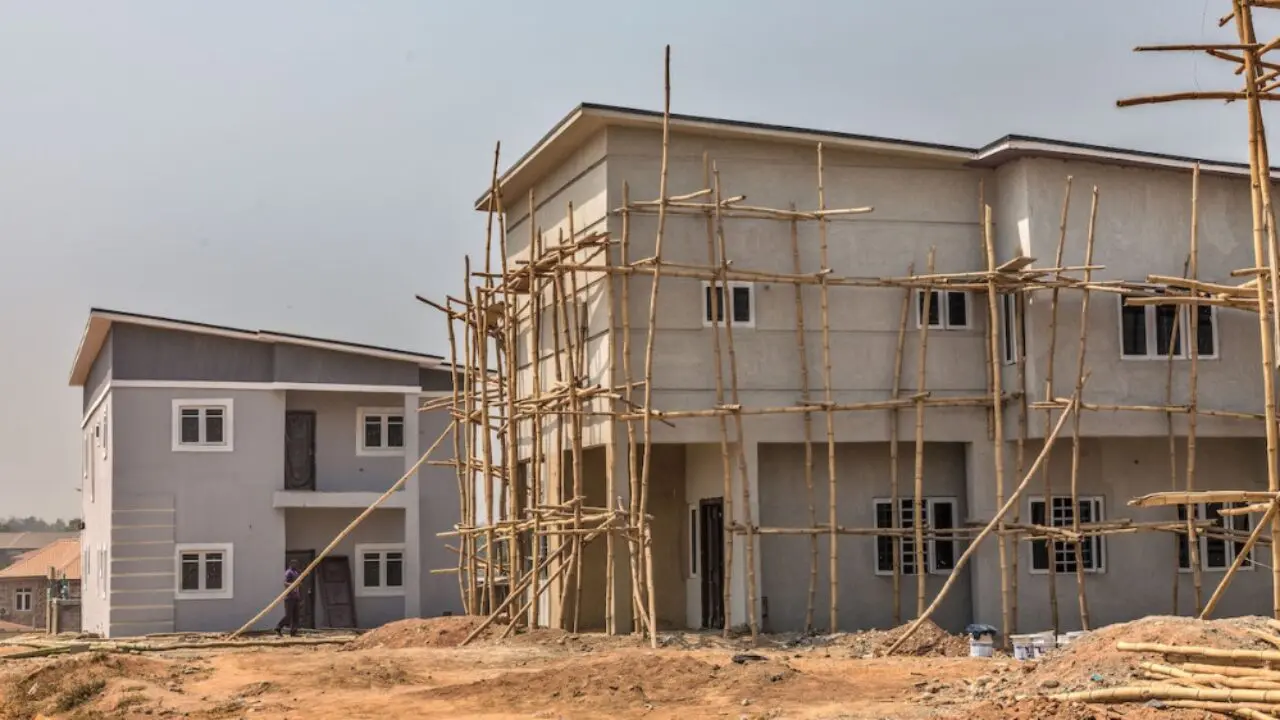
For many Nigerian families, the dream of owning a home has shifted from a hopeful aspiration to a constant struggle—pressed down by rising costs, surging rents and an unpredictable property market that delivers new shocks at every turn.
This has made the “build or buy” dilemma one of the hottest questions in Nigerian personal finance.
Traditional wisdom insists “building is cheaper,” but today’s realities are challenging that age-old belief.
For some, building offers greater control, customisation and long-term value. Yet others argue that buying ready-made properties is ultimately less stressful and, in some cases, more cost-efficient. At the heart of both arguments lies one major issue: affordability.
Since 2015, housing costs have climbed sharply while income levels have hardly moved.
The enthusiasm that marks the start of a building project slowly fizzles as unforeseen bills begin to pile up.
“I buy materials today, but come next month, I can no longer afford the same things again,” laments Abuja-based landlord John Monday. “It feels like I’m building in an inflation pit. I don’t know when this house will finish, but as a traditional man, I am committed to building my own home, step by step.”
He is not alone. Fluctuating costs affect every stage of construction.
Data from the National Bureau of Statistics (NBS) reveals that the prices of building materials rose by over 30% in 2024. Cement alone surged to around ₦8,800 from ₦4,000 within the year, reflecting broader hikes in building materials and labour.
Meanwhile, mortgage penetration remains low—between 20 and 25%—as most Nigerians rely on personal savings.
This means millions of self-builders must fund their projects gradually while still paying rent, a situation that slows progress and stretches construction timelines far beyond their plans.
“Honestly, when people ask if it’s cheaper to buy or build a house, my answer is simple: it depends, but building often makes more sense. Building lets you control costs, choose materials, and phase work according to your budget,” explained Abuja-based Lawal Ismail.
Buying might be faster, but developers’ prices are high. And hidden charges or poor finishes can turn it into a headache. When you build, you get a home that’s truly yours — your vision, your investment, your peace of mind.”
Still building is not without challenges—and they go beyond inflation. Lawal warns that many underestimate costs. “They feel construction costs less because they only calculate blocks and cement. They disregard soil analysis, government approvals, manpower losses, reworking, changes in designs, or the expense of inadequate supervision,” he explains.
On the other hand, buying a house comes with additional financial layers, including agency fees, legal documentation, verification and sometimes renovation costs.
Ayodele Fadare, an Abuja-based homeowner, recalls: “I thought buying would be straightforward, but the legal and infrastructure fees added over ₦3 million. Even then, I still prefer this path because building myself would have drowned me in costs.”
Alternative financing is expanding
Amidst the challenges, housing cooperatives and new financing options are emerging to ease the burden.
Cooperatives now buy materials in bulk to secure better prices for members.
The Federal Mortgage Bank of Nigeria, or FMBN, state housing funds and multiple private institutions now provide mortgage products with single-digit interest rates for civil servants, off-plan payment plans and flexible rent-to-own schemes.
Lagos’ Rent-to-Own Scheme continues to deliver completed units, while developers in Ogun and Oyo states provide flexible payment plans for lands or estates.
These innovations show how structured financing can make homeownership more realistic for many.
Yet mortgage access still faces barriers. Plenty of Nigerians cannot qualify owing to informal income, inconsistent financial records or strict credit requirements. Interest rates from private institutions can still be high, and approvals are slow
Still the growth of mortgage-backed products, particularly FMBN’s National Housing Fund loans, cooperative housing mortgages, and employer-assisted homeownership schemes, marks a shift, offering hope for middle-income earners who previously had no viable path to homeownership.
Ultimately, whether or not construction or buying is cheaper in Nigeria hinges on several factors like access to stable funds, inflation trends, location and project management capacity.
One fact is clear: Nigeria urgently needs stronger housing support systems—affordable mortgages, stable building material prices, professionalised construction services, and increased housing supply.
Summary not available at this time.