



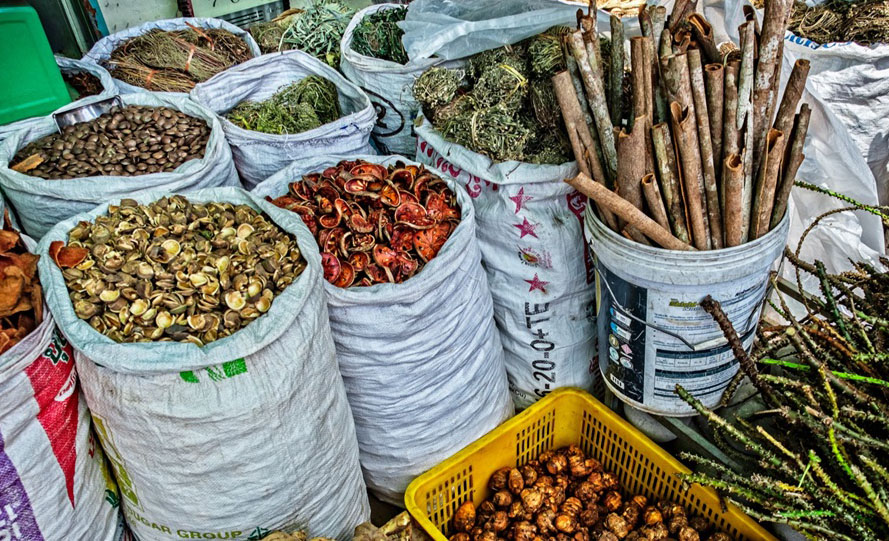
When does a culture’s oldest healing wisdom evolve from folklore into science?
This question sits at the centre of Nigeria’s unfolding transformation in healthcare, one where ancestral remedies no longer linger at the margins of medicine but are slowly entering the laboratory.
The shift is visible in clinics, research centres and consultation rooms across Abuja, where traditional and modern practitioners now work side by side to treat patients who straddle both worlds.
The World Health Organisation estimates that 70–80% of Nigerians rely on traditional medicine for primary care.
Similarly, data by the Federal Ministry of Health confirms that over 200 certified herbal practitioners now collaborate with conventional clinics. This shows that Nigeria’s health sector is experiencing a consequential realignment.
In an Abuja-based clinic, a young woman with sickle-cell anaemia sits between a physician and a certified herbal practitioner.
“People think we fight each other,” Adam Mariam, the physician, remarks. “But the truth is that our patients use herbs whether we approve or not.”
As a doctor, Mariam says she tests the herbs and supervises their use. “This wasn’t possible ten years ago. Now we’re learning to respect each other’s knowledge.”
This shift is not driven by patients alone. The Federal Ministry of Health’s Traditional, Complementary and Alternative Medicine (TCAM) department has intensified certification and standardisation efforts.
In a training hall in Abuja, Mallam Idris, a local medical practitioner with more than fifteen years of experience, reflects on why he now accepts documentation.
“Before now, nobody asked us to write anything down,” he says. “We used our hands and instincts. But we are losing too many healers to age, and their knowledge disappears with them.”
His dilemma captures the central tension: how much modernisation can occur before tradition feels diluted?
Inside the hospitals, science leans in
At another clinic in Abuja, Anwuli, a medical researcher studying plant-based therapies for diabetes, hypertension, infertility and inflammatory disorders, describes her work with urgency.
“Patients already come in using herbs. My job is to reduce the harm, not impose judgement. We scientists stopped looking down on herbs and finally started looking into them. That is why the merging is happening.”
Her recent six-month study showed that bitter-leaf extract moderately lowers blood sugar but can irritate the liver if improperly processed—exactly the kind of data traditional practice has systematically documented.
Amaka, a civil servant with chronic ulcers, explains why she prefers hybrid care. “Hospital drugs stop the pain, but the herbal tea calms my stomach faster.”
Another patient added: “Insulin is my lifeline, but herbs help with energy and sleep. I grew up on herbs. My children grew up on hospital drugs. So I use both. Why should I choose?”
They reflect a national trend. A 2020 study among adult women in Ibadan found 81.6% used traditional medicine, especially for chronic conditions like hypertension, arthritis and infertility.
How hybrid clinics work
In these clinics, merging has evolved into an informal protocol. Typically, a patient begins with modern diagnostics such as blood tests, scans and vitals before herbal remedies are introduced.
Traditional practitioners propose formulations, but modern staff verify safety by checking plant compounds against internal toxicity databases. Finally, the two sides fill out a joint patient file.
Notable frictions
Despite the progress, integration is fragile. Nigeria still lacks comprehensive clinical trials for most herbal formulas. Dosage inconsistencies persist because of environmental variations in plant potency.
Thousands of healers resist documentation, seeing it as a threat to ancestral secrecy. Many doctors privately dismiss herbal medicine as “unscientific,” while healers view doctors as culturally disconnected.
Anwuli captures the friction succinctly. “Herbs are not the problem. The people using them are. Doctors don’t trust healers. Healers think doctors are culturally blind. And patients get caught in between. We need humility on both sides.”
Commercialisation adds another layer of risk. Nigeria’s herbal industry—potentially worth over 7 billion naira annually—has attracted opportunists selling poorly processed, unregulated products. Integration only works when safety is guaranteed.
Experts say sustainability will require investment, not intention. Mandatory certification, university-funded research, community education on dosage and interactions, and large-scale documentation projects are essential.
“If I die today, everything I know dies with me. My children don’t know the plants,” says Mallam Idris.
Summary not available at this time.


