


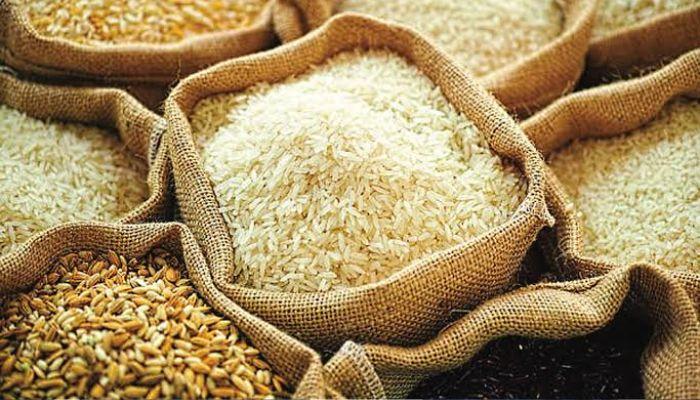
The past months have brought succour for Nigerian consumers. After months of sky-high prices, food inflation is starting to ease, contributing to a sharp decline in overall inflation. The latest report from the National Bureau of Statistics puts the food inflation rate at 13.12%, marking a 26% decline from 39.16% in October 2024.
Rice has recorded one of the most dramatic declines, dropping by 28%, with market analysts predicting further decreases as the year winds to an end.
Typically, rice demand surges during the last quarter of the year, when social events are more popular, causing prices to climb. A medley of global and domestic factors explains why rice prices are falling today.
Start with the global market dynamics driven by major global rice exporters like India. After imposing export restrictions between 2022 and 2023, India eased its export ban in March, flooding international markets, thereby pushing prices lower.
By August, India had shipped nearly 15 million metric tonnes, compared with Thailand’s 4.7 million and Vietnam’s 6 million metric tonnes.
The country also pegged the minimum export price for basmati rice at $950 per tonne. An expected bumper harvest, experts reckon, will further depress rice prices going into 2026.
Traders also point at reopened land borders as another notable factor. In March 2024, President Tinubu directed the reopening of air and land borders with the Republic of Niger, which had been previously closed as sanctions following a military coup in the country.
Owing to the lower tariffs, neighbouring countries like the Benin Republic have long served as primary routes for imported rice, which is technically banned in Nigeria.
Nevertheless, relaxed border controls have allowed rice to be smuggled into the country, forcing domestic rice millers and traders to bring down their prices.
Compared with 2024, the 2025 wet season, spanning from April to October, delivered solid yields for foods like rice, maize, cowpea and other staples. This strong harvest season, followed by government initiatives, ramped up local production.
Market observers note that national policies, such as the “Renewed Hope” agenda, particularly drove this spurt. The 2025 national budget allocated more resources to agriculture with support for mechanised farming and import waivers on farming inputs.
Reduced petroleum prices (from N1,350 per litre to N870), combined with a stronger Naira, also cut logistics costs, resulting in a dramatic drop in inflation—from 34.6% in November 2024 to 16% in October 2025.
Increased rice stocks have led states like Lagos to set state-produced brands at N57,000 for a 50 KG bag.
Yet the outlook isn’t totally auspicious. While consumers celebrate falling prices, local millers and traders grapple with profound economic pressures.
Merchants who bought their stock at high prices are now forced to sell at a loss. Even though rice can be stored for a couple of years under ideal storage conditions, this means prolonged waiting and an inability to restock when prices are low.
Imported rice, often better processed, dampens demand for local variants, pushing local mills to scale down or shut down operations altogether. This could discourage farmers from planting rice even as local production lags behind consumption.
Declining rice yields
According to the United States Department of Agriculture, local rice output has steadily declined in the last three years, thanks to climate change and steep production costs.
In contrast, national consumption surged to 7.66 million metric tonnes in 2024 alone, with imports reaching 2.4 million metric tonnes, up from 1.89 million in 2023.
Since the 1970s, the Federal government has rolled out manifold initiatives to enhance local yield and curtail imports, all to little progress.
Experts note that tightening border surveillance could improve the domestic outlook. While that may curb smuggling, thereby reducing market competitiveness, it doesn’t address the longstanding problems that face the local rice sector.
Scaling up investment in irrigation can lower the farmers’ dependence on rainfall. In the same vein, sustainable practices, such as disease-resistant seeds and dry-season farming, can help ensure that the country meets local demand when global supply tightens.
If lower rice prices mean great delight for Nigerian families this Christmas, they’re less so for traders and millers.
Summary not available at this time.